Portrait Painting Style Guide: Finding Your Unique Voice
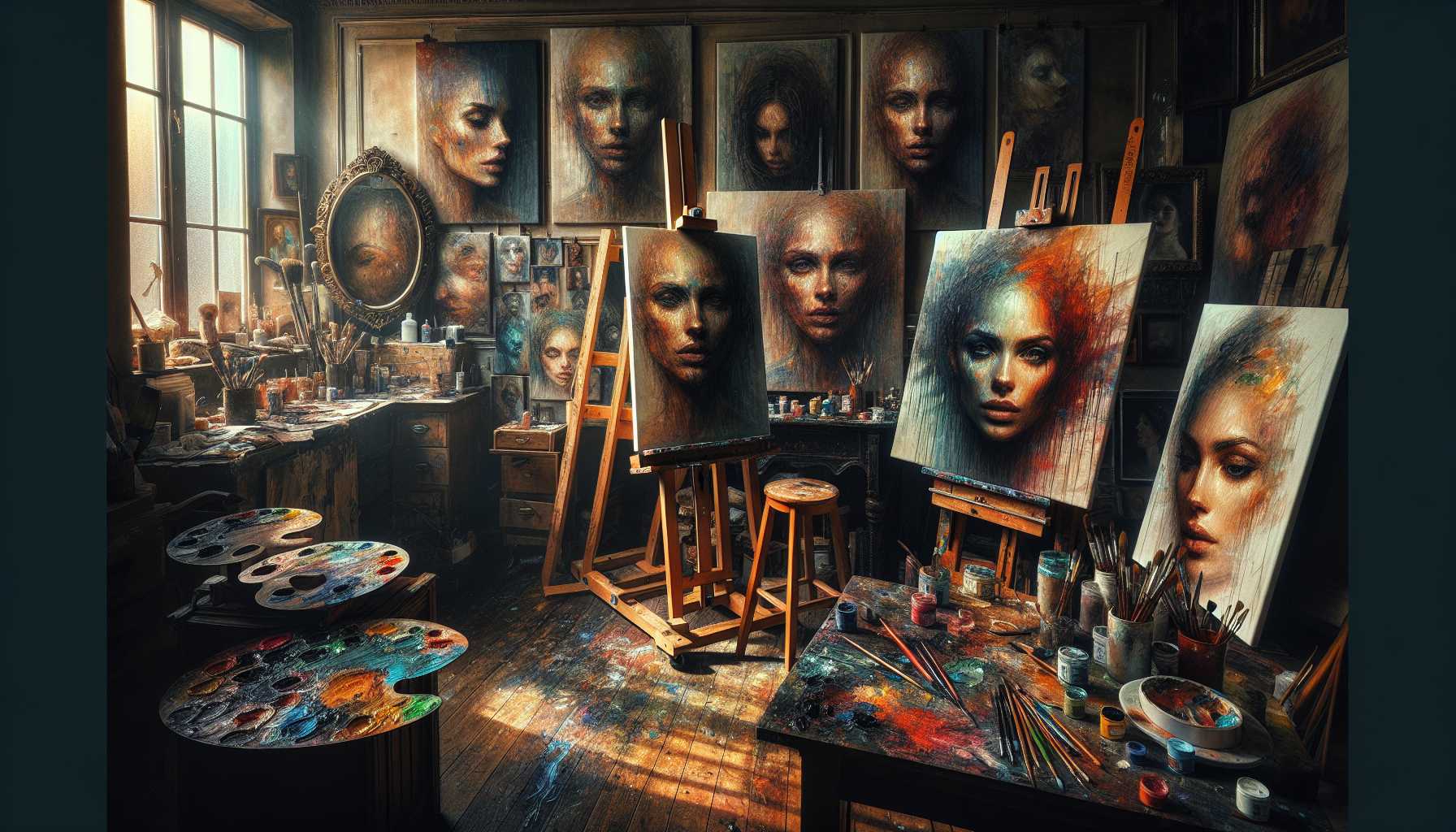
Guidance to Cultivate Your Individualistic Style in Portrait Painting
Most artists aspire to develop a distinct style that prompts others to recognize their work instantly. Identifying your unique voice in the realm of portrait painting can be both thrilling and daunting.
Fear not, you're not alone in this pursuit. Let's discuss how to discover and nurture your personal portrait painting style.
Recognizing the Ingredients That Make a Style Distinct
Your artistic style is as individualistic as your fingerprint. It belongs solely to you.
A style results from the amalgamation of various elements. The narrative of your brushwork, the reflecting character from your color preferences, and your portrayal of light indicating your viewpoint are all foundations of your style.
Reflect on the artists you look up to. Van Gogh's signature swirling brushstrokes are instantly recognizable, and Vermeer's luminous skin tones are iconic. Both artists honed their voices through consistent practice and explorations.
Your style will naturally surface with time. However, you can certainly steer its evolution.
Experimenting With Varied Approaches to Portrait Painting
Classical Realism
Classical realism emphasizes exquisite precision. Artists devote hours to intricately defining every detail, from every eyelid to every shade of skin tone.
This attention to precision endows invaluable skills. You'll gain a deep understanding of anatomy and sharpen your observational abilities. These fundamentals will lend a strong foundation to any style you choose to embrace in the future.
Impressionistic Portraits
Impressionism aims to capture the essence, not every microscopic detail. Energetic loose brushstrokes and optical color blending, as contrasted with palette blending, characterize this style.
Impressionism offers a more spontaneous feel, ideally suited for artists who favor expeditious creation. The focus moves from precision to the evoking of emotions and creating the ambiance.
Avant-garde Abstract Portraits
Abstract portraits champion breaking limits. Facial features may contain deconstructed elements or display wholly unrealistic hues. The overarching intention here is to prioritize emotional evocation over literal representation.
This genre provides unalloyed artistic freedom. You're encouraged to play with an assortment of shapes, colors, and textures, unencumbered by any preordained rules.
Spotting Your Innate Tendencies
Take note of your work habits. Do you revel in meticulously laying out tiny details or do you gravitate towards grand, sweeping gestures?
Identify which elements excite you. Whether it's the pursuit of the perfect skin tone mix or creating dramatic lighting effects, these preferences highlight your looks that will authentically represent your style.
Maintaining a painting diary can be informative. Jot down your experiences from each painting session, noting what you found enjoyable, what was natural, and what felt like an uphill battle.
Dabbling with Diverse Techniques
Brushwork Variations
Make a habit of trying out different brush techniques frequently. Attempt one portrait with intricate, precise strokes and another with audacious, confident strokes.
Play with brush sizes and introduce a palette knife or other devices sometimes. Each tool offers unique textures and effects.
Color Exploration
Push your limits. Try painting a portrait using only warm tones, or experiment with a more restricted palette with just three colors.
Understand how color influences mood. While cool blue hues prompt feelings of calm, warm oranges can evoke a sense of energy and vitality.
Composition Adventures
Don't stick to centering your subject all the time. Experiment with dramatic cropping, and try different angles.
Negative spacing adds depth to your painting. Sometimes, what you leave out can be as significant as what you include.
Gleaning from Master Artists
Don't stop at merely admiring the works of artists you resonate with; critique them.
Decipher how they negotiate edges — are they sharply defined or do they blend imperceptibly? How have they approached the use of color temperature? How do their compositions flow?
Imitating master pieces from time to time isn't about replicating the artists. It's a method to understand their techniques and use this knowledge to inform your work in the future.
Honing Your Distinct Voice
Begin with What Charms You
Paint what genuinely interests you. If painting children captivates your interest, plunge deep into it. If the lines on older faces fascinate you, direct your focus there.
Your enthusiasm will naturally shine through your work, inviting viewers to connect with it.
Embrace Your "Happy Accidents"
Sometimes, the most charming stylistic elements arise from what seem like errors at first. That surprise perfectly blended pigment or the stroke that went awry but ended up perfect?
Don't shrug off these instances. Instead, take them as lessons that might direct your attention towards your unique voice.
Maintain Consistency, Yet Endeavor to Grow
Consistency doesn't imply painting monotonously. It highlights the elements that remain constant in your work, making it instantly recognizable.
Perhaps, you always incorporate dramatic lighting, or your brushwork follows a particular rhythm. These constitute your signature.
Building Your Confidence in Artistry
Gaining confidence takes time, so be patient with yourself.
Share your work with other artists. Join local art communities or online platforms. Constructive criticism helps you understand your strengths and areas needing improvement.
Make it a habit to photograph your work regularly to keep a record of your progress. It will amaze you to see how much you have improved over time.
Typical Pitfalls in Style Development to Evade
Avoid imitating another artist verbatim. While deriving inspiration is wonderful, imitating others curbs your growth.
Shun extensive changing between entirely different styles. Casual experimentation is beneficial, but be sure to provide ample time to each approach to develop fully.
Refrain from rushing the process. Style development is a gradual journey. Rest assured that each painting you complete draws out more of your unique voice.
Pragmatic Drills for Style Enhancement
The 30-Day Face-off
Commit to painting a small portrait daily for a month. You may use the same subject throughout if you wish. Concentrate on one aspect each week such as brushwork, color, composition, and finally, combining these aspects.
Style Versus Style
Try painting the same portrait in three different styles - a realistic portrait, an impressionistic one, and an abstract rendition. Observe which approach feels more comfortable.
Master Stroke Series
Pick three artists whose styles interest you. Try their methods and then create a portrait that amalgamates elements from all three styles to discover what emerges.
Cherishing Your Unique Journey
Your personal voice in the creative world already resides within you. Every painting you create brings it to the fore.
Avoid comparing your beginnings to someone else's middle, instead, focus on your own development and learning.
Remember that a style evolves continually. Compare early works by Van Gogh with his later ones and the transformation becomes evident. Similarly, Picasso's work underwent several phases. Progression and adaptation form a natural part of the creative process.
Progressing with Confidence
Discovering your unique voice in portrait painting is a thrilling lifelong journey. Embrace and enjoy the process. Celebrate small accomplishments and trust your instincts.
Your style will naturally reflect who you are, as an individual and an artist, which is an exclusive blend that no one else can duplicate.
Persevere with painting and keep experimenting. Keep evolving. Your distinct voice is out there, waiting to be unveiled, one brushstroke at a time.
The art world is waiting for your exclusive perspective. Begin painting it today.