Urban Scene Painting: Modern Impressionist Approach
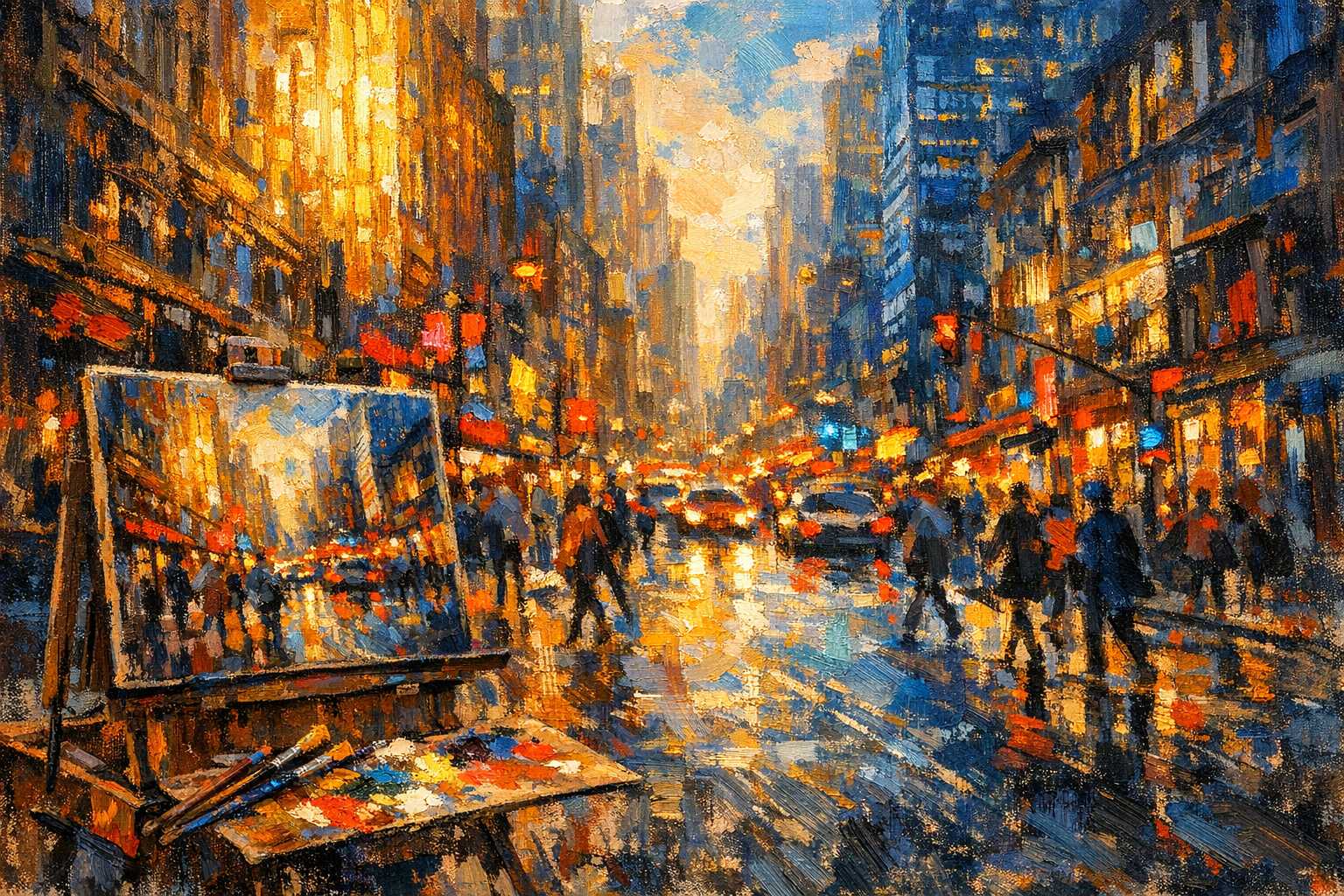
Modern Impressionism in Urban Landscape Painting
There's something truly enchanting about encapsulating the hubbub of city life on canvas. Urban landscape painting has witnessed profound changes since Impressionist maestros first prowled the streets of Paris. The artists of our time employ a mashup of traditional techniques and modern viewpoints in crafting unforgettable cityscapes.
The Unique Charm of Urban Landscape Painting
Urban vistas provide an unending supply of inspiration. Hustling streets narrate tales via changes in light and movement. The architecture affords the boldness of geometric shapes, while people rushing past inject vitality and pace into every composition.
Contemporary Impressionist urban landscape painting portrays these instances differently from traditional realism. It emphasizes conveying emotions rather than meticulous detailing. City life comes alive through the interplay of color and brushwork instead of chronicling every brick and window.
Essential Equipment for Urban Landscape Painting
Starting out in urban landscape painting doesn’t necessitate pricey equipment. Here's your checklist of needed gear:
- A portable easel or drawing board
- Canvas panels or watercolor paper
- Basic acrylic or oil paints
- Different brush sizes
- Palette knife
- A cozy folding chair
Many artists who paint the urban landscape favor acrylics for outdoor jobs, given their fast drying time and no need for solvents. They make an excellent choice for bustling street corners where time is of the essence.
Picking Your Urban Topic
Not every cityscape translates into a spectacular painting. Keep an eye out for places offering intriguing contrasts. The sunrise hitting tall buildings produces dramatic shadows, busy junctions brim with action and energy, while tranquil alleys offer intimate slices of life.
Reflect on the time of the day - the golden hour light can turn run-of-the-mill streets into awe-inspiring locales. The dusk captures the allure of street lighting against twilight horizons. Even cloudy days furnish uniform lighting ideal for intricate work.
Modern Impressionist Methods
Historical Impressionists set the trend of delineating colors into perceptible brush strokes. Contemporary urban painters have extended this concept, with audacious palette knife work suggesting bustling traffic. Swift suggestive strokes encapsulate people in action. The broken color technique grants a shimmering aura to buildings lit by the reflected light.
Don't strive for perfect perspective or accurate measurements. Concentrate on capturing the essence of the scene. Enhance colors that appeal to you and reduce intricate architectural features into elementary shapes.
Dealing with Urban Light and Shadow
City light behaves differently from natural landscape light. Buildings form crisp shadow lines, glass surfaces mirror and multiply light sources, and artificial lighting inserts warm and cool contrasts all day long.
Study how light bounces off different surfaces. Observe how glass and metal interact with light differently compared to concrete and asphalt. These subtle contrasts can inject depth and fascinate into your urban landscape painting.
Embodying Movement and Energy
Cities are forever humming with activity. People walk, cars zip around, and life, as always, buzzes along. The gusto of modern Impressionist methods is apt at capturing this ceaseless motion.
Use directional brushstrokes to insinuate movement. Blur background elements to highlight foreground activities. Mix up your application of paint - lean towards thick impasto for static components, and thin washes for moving subjects.
Color Palette for Urban Landscapes
Urban settings contain more subdued hues than natural landscapes. However, this doesn't mean your artwork should be drab. Seek out surprising color opportunities.
Reflected light from vibrant signs breathes life into dreary sidewalks. Rust and weathering generate beautiful accents of orange and brown. Even smog can add interesting atmospheric effects far off.
Create more expressive and memorable artwork by enhancing your colors marginally beyond reality. If a building appears slightly blue in the shadow, intensify the blueness.
Framing Tips for City Streets
Without solid composition, urban scenes can appear overwhelming. Utilize guiding lines created by streets and building edges. Contextualize your subject using architectural elements. Pay attention to triangular shapes formed by rooftips and shadows.
Resist the temptation to include everything in your visual frame. By grouping similar elements together, simplify bustling scenes - a throng of people can become intriguing color shapes rather than detailed portraits.
Painting Outdoors vs Studio Work
Often, urban landscape paintings begin outdoors with hasty studies that encapsulate a fleeting impression of light and atmosphere. Later in the studio, these initial sketches can be refined and expanded upon.
Different artists have different preferences. Some love painting exclusively from life, while others use photographs as a reference. There’s no one-size-fits-all approach. Discover what aligns with your schedule and artistic aspirations.
Common Hurdles and Solutions
Painting in urban settings sports unique challenges. Curious bystanders can be a source of distraction. Weather can change quickly amid tall buildings. Scouting for suitable vantage points takes practice.
Beginners should consider starting in quieter locations to grow in confidence. Early morning sessions often offer fewer disruptions. Start on a small scale - even postcard-sized studies can encapsulate powerful impressions.
Cultivating Your Urban Style
Each artist develops a distinct viewpoint in urban landscape painting. While some artists emphasize architectural nuances, others underscore the human aspect. The most successful artists usually strike a balance between the two.
Examining the work of fellow urban painters can be an enlightening exercise. Take note of how different artists side-step similar obstacles. However, your interpretation should be original and not a carbon copy of their solutions.
Building an Urban Painting Habit
Regularity accelerates your skillset in urban landscape painting faster than infrequent intensive sessions. Even allocating fifteen minutes daily to sketch city scenes can boost your progress exponentially.
Maintain a small sketchbook for quick observations. Document fascinating light effects and color combinations. Often, these written insights prove more advantageous than hurried sketches.
Conclusion
Urban landscape painting infused with a modern Impressionist touch offers infinite avenues for artistic expression. Cities present a continuously fluctuating canvas teeming with life and energy. As you practice and hone your skills, you'll carve your own signature style of encapsulating the urban experience.
Start small and straightforward. Prioritize capturing emotions over factual accuracy. Most importantly, savor the process of unveiling beauty in everyday urban life. Your paintings, mirroring this genuine passion, will resonate with viewers who share a love for urban existence.