Vintage Botanical Art: Historical Drawing Techniques
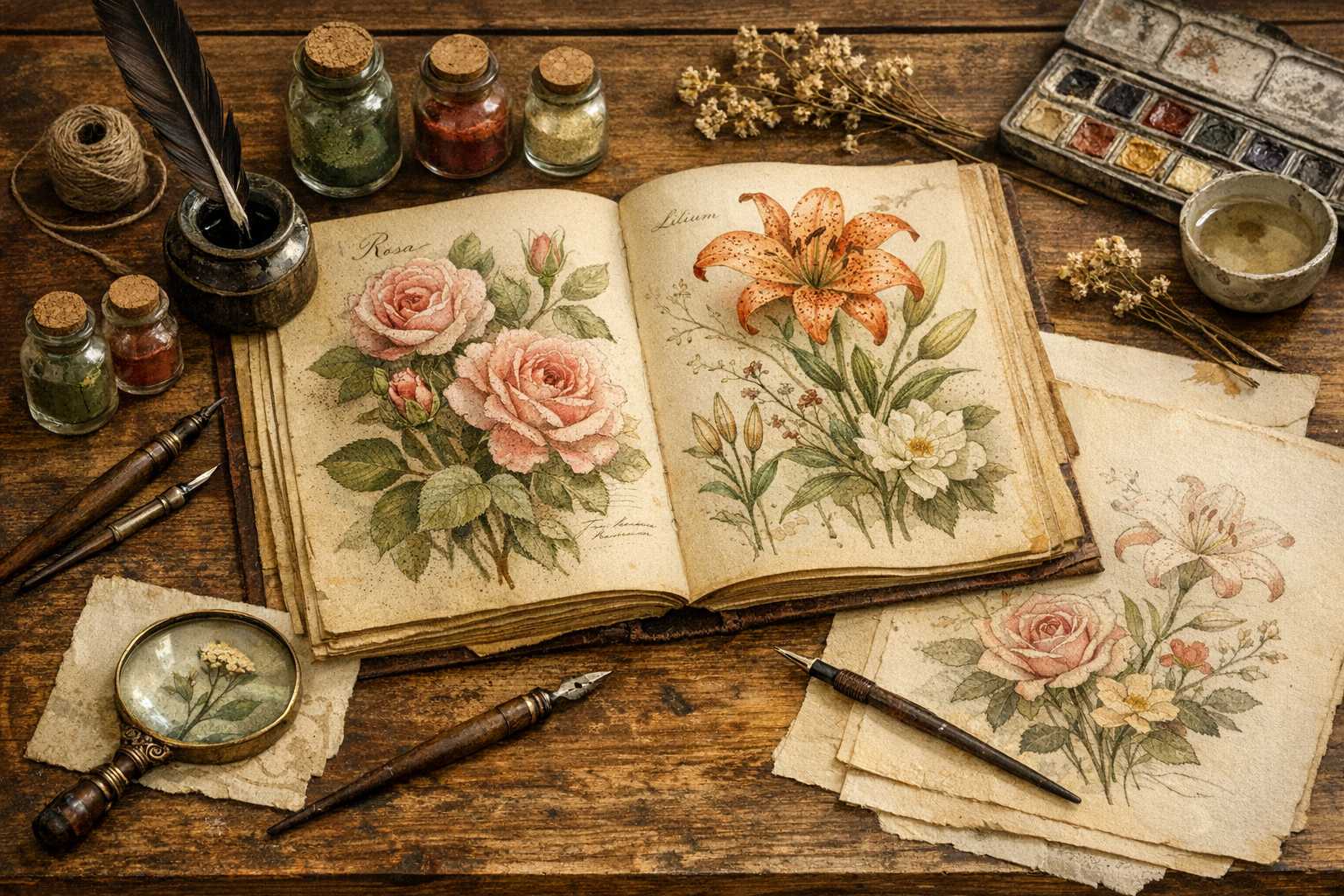
Vintage Botanical Art: Historical Drawing Techniques
There is something undeniably captivating about antique botanical illustrations. They are precise yet expressive, scientific yet poetic. More than simple drawings of plants, they are records of observation, craftsmanship, and human curiosity. To understand their beauty fully, it helps to look at where they came from and how they were made.
What Is Vintage Botanical Art?
Vintage botanical art refers to the detailed illustration of plants, usually created for scientific study, books, herbals, journals, and collections. These artworks were designed to be both informative and visually refined.
For centuries, botanical illustrations helped botanists, physicians, gardeners, and explorers identify, compare, and classify plant species. Today, they are valued not only for their scientific importance but also for their elegance and historical charm.
Why Botanical Illustration Was So Important
Before the invention of photography, botanical illustration was one of the most reliable ways to document plant life. Scientists depended on artists to produce accurate visual records that could be studied, shared, and published.
As explorers traveled across Asia, Africa, the Americas, and the Pacific, they encountered unfamiliar species that needed to be recorded in detail. In many cases, artists either accompanied expeditions or worked from freshly collected specimens brought back to Europe.
Accuracy mattered enormously. An imprecise image could confuse one species for another, which was especially serious when plants were used in medicine, agriculture, or trade. Botanical illustrators were therefore expected to combine artistic skill with close scientific observation.
The Golden Age of Botanical Illustration
The period from the 17th through the 19th century is often considered the golden age of botanical illustration. During these centuries, advances in botany, printmaking, and global exploration led to an extraordinary flowering of illustrated plant books.
Artists worked closely with botanists, collectors, and publishers to create images that were both beautiful and exact. Institutions such as the Royal Botanic Gardens, Kew, became major centers for botanical study and illustration, commissioning and preserving vast numbers of works.
One of the best-known figures from this tradition is Pierre-Joseph Redouté, the celebrated Belgian-born botanical artist who worked in France. His luminous rose, lily, and garden flower illustrations remain among the most admired botanical images ever produced.
Tools Used by Vintage Botanical Artists
Although their results were remarkably sophisticated, botanical artists often relied on a relatively modest set of tools. What mattered most was not complexity, but control, patience, and technical mastery.
Graphite and metalpoint sketches were often used in the planning stages to establish structure and proportion.
Quill pens and, later, fine dip pens allowed artists to define delicate contours and minute details such as veins, hairs, stamens, and seed structures.
Watercolor was one of the most important painting mediums in botanical illustration. Its transparency made it ideal for building naturalistic color gradually without obscuring fine detail.
Vellum was sometimes used as a painting surface, especially for high-end commissions. Made from prepared animal skin, vellum offered a smooth, durable surface that could hold fine detail beautifully. However, many botanical illustrations were also made on high-quality paper, particularly for printed publications.
Magnifying lenses helped artists study minute structures that could not be drawn accurately by eye alone.
Core Drawing and Painting Techniques
The finest botanical illustrators developed methods that balanced clarity, texture, and realism. Several of these techniques remain central to botanical art today.
Stippling
Stippling is the use of countless tiny dots to build tone, texture, and form. Areas with denser dots appear darker, while more widely spaced dots create lighter passages.
This method was especially effective in prints and pen work because it could suggest subtle shading without overwhelming the subject. It required extraordinary patience and control.
Hatching and Cross-Hatching
Hatching uses closely spaced parallel lines to indicate shadow and volume. Cross-hatching adds another layer of lines at a different angle, deepening tone and increasing complexity.
These techniques were widely used in engraving and black-and-white botanical publications. They allowed artists and printmakers to suggest three-dimensional form even without color.
Wet-on-Wet Watercolor
In wet-on-wet painting, pigment is applied to damp paper or into a wet area of color. The paint spreads softly, creating gentle transitions and natural-looking blends.
This approach was useful for petals, soft foliage, and other plant surfaces with delicate gradations. Although it may appear spontaneous, it demands careful timing and experience.
Wet-on-Dry Watercolor
Wet-on-dry watercolor involves applying paint to dry paper. This gives the artist much sharper control and cleaner edges.
Botanical illustrators often used this method for defining leaf margins, stems, seed pods, and other precise structures. It was especially important when scientific clarity was the priority.
Glazing
Glazing is the process of layering transparent washes of watercolor over fully dried paint. Each layer subtly modifies the one beneath it, increasing depth, richness, and realism.
This technique helped artists achieve the luminous, velvety color often seen in historical flower studies, especially roses, tulips, and richly colored fruits.
How Botanical Artists Studied Plants
A successful botanical illustration began long before the final drawing. Careful observation was the foundation of the entire process.
Artists often studied plants at different stages of growth, from bud to bloom to seed. They examined how petals curled, how leaves attached to stems, and how light revealed texture across a surface.
Quick preparatory sketches were common. These were not always meant to be polished works, but rather visual notes that captured structure, proportion, and key identifying features.
Many artists also worked from preserved specimens in herbaria, especially when fresh material was unavailable. Dried specimens were useful for structural reference, though fresh plants remained essential for accurate color and form.
The Importance of Scientific Accuracy
In botanical illustration, beauty alone was never enough. A successful image had to be botanically reliable.
Artists needed a working knowledge of plant morphology and often collaborated directly with botanists, collectors, or gardeners. Their task was not simply to create an attractive composition, but to show the features that distinguished one species from another.
For this reason, a single plate might include the whole plant along with enlarged details of the flower, fruit, seed, root system, or cross-section. These additions allowed the viewer to understand the plant more completely than a decorative image ever could.
Important Botanical Illustrators to Know
Several artists played a major role in shaping the history of botanical illustration.
Maria Sibylla Merian was a pioneering naturalist and artist whose work linked plants and insects in a way that was both visually striking and scientifically important. Her studies of Surinamese flora and fauna remain groundbreaking.
Pierre-Joseph Redouté became famous for his refined watercolor engravings of roses, lilies, and other cultivated flowers. His work combined scientific discipline with unusual softness and grace.
Georg Dionysius Ehret was one of the most influential botanical illustrators of the 18th century. He collaborated with leading botanists, including Carl Linnaeus, and helped shape the visual language of plant classification.
Sydney Parkinson, who sailed with Captain James Cook, created invaluable drawings of plants collected during the voyage. Although he died young, his contributions to Pacific botanical documentation were substantial.
How Color Was Mixed and Applied
Color accuracy was a serious challenge in historical botanical art. Artists often prepared or adjusted pigments themselves and needed a practical understanding of how colors behaved in layers.
Historically, pigments came from a range of sources, including minerals, plants, and insects. Some were common and affordable, while others were rare and costly.
Watercolor was typically applied in thin, transparent washes. Each layer had to dry before the next was added, especially when the artist wanted to preserve brightness and detail. Rushing the process could muddy the colors or damage the paper surface.
To capture a plant faithfully, artists often compared their mixtures directly against the living specimen. Matching botanical color convincingly required not just technical skill, but trained observation.
The Role of Engravers in Botanical Publishing
Many historic botanical images reached the public not as original paintings, but as prints. This made engravers essential to botanical publishing.
An illustrator’s design was transferred onto a copper plate by an engraver, who incised the image so it could be printed repeatedly. In some cases, the printed image was then hand-colored by artists or workshop assistants.
The quality of the final published image depended heavily on the engraver’s interpretation. A skilled engraver could preserve subtle structure and elegance, while a less careful one might lose important scientific detail. Botanical publishing was therefore often a collaboration between artist, engraver, colorist, botanist, and printer.
How to Try These Techniques Yourself
You do not need to be a professional illustrator to begin exploring botanical art. The best way to start is simply and patiently.
Begin with a single leaf or flower. Focus first on proportion, silhouette, and the way the parts connect.
Try stippling or fine hatching with a pen to understand how tone can be built gradually. Work on small studies before attempting a full plant portrait.
If you use watercolor, start with transparent layers rather than heavy color. Practice building form slowly with light washes.
Whenever possible, draw from life instead of relying only on photographs. Real plants reveal details that cameras often flatten or miss, and direct observation will strengthen both your drawing and your understanding.
Botanical gardens, greenhouses, local parks, and even houseplants can provide excellent material for study.
Where to Find Vintage Botanical Art for Inspiration
It is easier than ever to explore historical botanical illustration thanks to digital archives and museum collections.
The Biodiversity Heritage Library offers thousands of public-domain botanical images and illustrated books online.
The Royal Botanic Gardens, Kew provides access to important collections and archival material that span centuries of botanical research and art.
The New York Public Library Digital Collections, The British Museum, and The Rijksmuseum also hold beautiful botanical works worth exploring.
Secondhand and antiquarian bookshops can be rewarding as well. Even when you cannot afford rare originals, facsimiles and older reprints can offer a more tactile and intimate experience than viewing images on a screen.
Why Vintage Botanical Art Still Matters Today
Botanical illustration remains relevant because it offers something photography alone often cannot: interpretation guided by knowledge. An illustrator can emphasize the features that matter most scientifically while still conveying the vitality and character of the plant.
This art form also teaches a slower way of seeing. Drawing a plant carefully forces you to notice its architecture, textures, irregularities, and rhythms. It becomes an act of study as much as an act of creation.
Just as importantly, vintage botanical art reminds us that science and beauty do not exist in separate worlds. The greatest botanical illustrators united both, creating works that continue to educate and inspire centuries later.
Final Thoughts
Vintage botanical art is far more than decorative imagery on aged paper. It is a record of discovery, discipline, and sustained attention to the natural world. At its best, it stands at the intersection of science, art, and wonder.
Whether you are hoping to create botanical illustrations of your own or simply want to appreciate historical works more deeply, understanding these traditional techniques opens a richer view of the field.
And perhaps that is the enduring appeal of botanical illustration: it shows us that careful looking can itself become a form of beauty.
SEO Slug: vintage-botanical-art-historical-drawing-techniques
Focus Keyphrase: vintage botanical art drawing techniques
Meta Description: Discover the history and beauty of vintage botanical art. Learn the traditional drawing and watercolor techniques used by master botanical illustrators, from stippling and hatching to glazing, and find inspiration for your own practice.