Portrait Drawing Tools: Essential Equipment Guide 2026
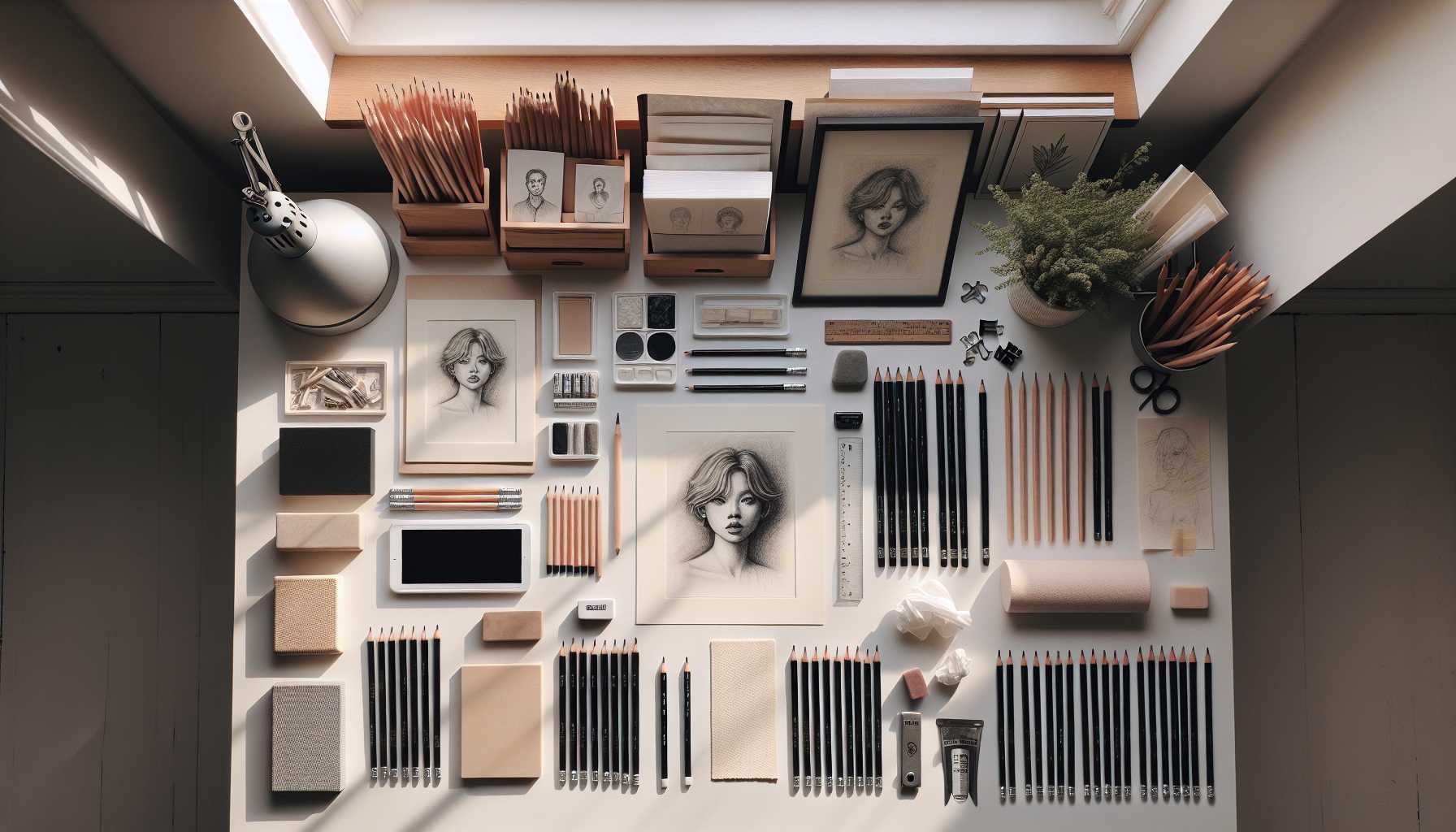
Essential Equipment for Portrait Drawing: Your Guide for 2026
Beginning your portrait drawing journey can seem daunting - where do you start and what equipment will give you the best value for money?
As an experienced portrait artist, I'm here to help provide guidance on the vital tools that will pave the way to your success in 2026.
The Basics: Core Equipment for Drawing Portraits
You don't have to empty your savings to start creating beautiful portraits. Here are the essentials every novice should begin with:
A quality pencil set forms the backbone of your kit. Start with HB, 2B, 4B, and 6B pencils - these will offer the variety needed for most portraits.
The importance of good paper should not be underestimated. While smooth paper allows for more detailed portraits, a rougher texture introduces an appealing texture but may be challenging for beginners.
Remember to include a reliable eraser - kneaded erasers are ideal for erasing graphite without causing damage to the paper.
Portrait Pencils 101
Graphite Pencils
Graphite pencils are the lifeblood of portrait drawing, with each grade having a particular function.
H pencils, namely 2H and H, create light and precise lines, perfect for the initial sketch and finer details.
HB pencils offer a median option, excellent for both general sketching and creating moderately darker tones.
For darker, more impactful lines, B pencils (2B, 4B, 6B, 8B) are key. They are crucial for creating depth and shadows.
Remember to start lightly and gradually darken - it's easier to darken than it is to lighten.
Charcoal Pencils
For deeper shades of black, turn to charcoal pencils. These are excellent for creating dramatic contrasts in your portraits.
While willow charcoal is soft and blends beautifully, compressed charcoal is adept at delivering intense darkness.
Always be prepared to clean up after using charcoal - it can get messy! Be sure to have tissues and blending implements ready.
Understanding the Importance of Paper Selection
Smooth vs. Textured Paper
Smooth paper, like Bristol board, is preferable for detailed work as it allows for precise lines and smooth blending.
On the other hand, textured paper adds a unique quality to your drawings. The grain of the paper interacts with the graphite, producing interesting effects.
Medium-weight paper (around 140gsm) is a reliable choice for the majority of portrait drawings. It is sturdy enough to withstand erasing and blending.
Recommended Paper Brands
Strathmore Bristol is a much-loved option amongst portrait artists, known for its smoothness, durability, and its ability to work well with graphite.
For those seeking texture, Canson Drawing Paper offers this at a reasonable cost - a perfect choice for practice work.
For those portraits that demand higher quality, the premium Fabriano paper may be worth investing in.
The Art of Erasing: Your Secret Weapon
Kneaded Erasers
Kneaded erasers are a blessing for portrait artists, picking up graphite without leaving any residue.
You can mold these erasers into points for precise removal, and they're also excellent for forging highlights.
Maintain the effectiveness of your kneaded eraser by periodically stretching and folding it to keep it clean.
Precision Erasers
Tombow Mono erasers are remarkably exact, perfect for creating small highlights in details such as eyes or strands of hair.
While they may seem extravagant, electric erasers are, in fact, very handy. They rotate to produce precisely circular highlights.
The Right Blending Tools Can Make a Huge Difference
Blending Stumps and Tortillons
Blending stumps are pivotal for achieving smooth skin tones, helping you steer clear from harsh lines.
Employ various sizes for different parts of the portrait. Larger stumps for broader areas, and smaller ones for details.
Always ensure your blending tools are clean. Dirty stumps can muddy your drawing.
Paper Towels and Tissues
Sometimes the simplest tools are the most effective. Paper towels are excellent for blending large areas.
For subtle blending, tissues work well as they're softer than paper towels.
To blend tiny areas, such as the corners of the eyes or nostrils, cotton swabs are ideal.
The Importance of Measuring and Proportioning Tools
Basic Measuring Techniques
One of the best measuring tools you have is your pencil. Hold it at arm's length to compare proportions in your work.
Grid methods can improve accuracy. Drawing a soft grid over your reference photo and paper can help.
Proportional dividers are tools professionals swear by. They ensure measurements are transferred accurately.
Welcome to 2026: Digital Tools
The iPad Pro coupled with the Apple Pencil offers incredible precision, leading many artists to go digital.
Drawing apps like Procreate feature amazing portrait options, including helpful guides and measurements.
However, traditional tools aren't disappearing. Many artists enjoy using both digital and traditional methods.
Setting Up Your Ideal Drawing Space
The Importance of Lighting
Good lighting prevents eye strain and helps in correctly seeing colors. Natural north light is typically best.
In situations where natural light isn't available, adjustable LED lamps serve as excellent alternatives. Opt for bulbs that balance daylight.
Try to avoid harsh overhead lighting as it casts confusing shadows on your work.
Organize Your Workspace
Keep your essential tools within easy reach. A simple pencil case or roll can help.
To minimize distortion and reduce fatigue, your drawing surface ought to be slightly angled.
Reference materials should be easily visible - a phone stand or tablet holder can be beneficial.
Advanced Tools for Devoted Artists
Specialty Pencils
White pencils are amazing for creating highlights on toned paper, adding a professional finish.
For consistent line weight, especially on detailed parts like eyelashes, mechanical pencils are excellent.
For smooth, even tones, using graphite powder with blending tools is a good idea, especially for backgrounds.
Professional Equipment
Drawing boards offer a sturdy surface. Opt for boards with clips to keep your paper secure.
Protect your finished drawings with fixative spray. Always use it in a well-ventilated area.
For tracing and transferring images, lightboxes are a must. LED versions are bright and stay cool.
Budget-Friendly Options
Creating stunning portraits doesn't necessitate expensive tools. Here's how to save:
Purchase pencils individually rather than in sets since you'll likely use some grades more often than others.
Before upgrading to pricey paper, practice on newsprint. It's ideal for gesture studies.
Consider making your own blending tools - rolled paper suffices and works surprisingly well.
Taking Care of Your Drawing Tools
Pencil Upkeep
Keep pencils sharp with a reliable sharpener as dull pencils result in muddy lines.
Store pencils correctly to prevent breakage. A pencil roll or case can help protect the tips.
Should the markings on your pencils wear off, label them. It'll save time during drawing sessions.
Paper Storage
Ensure paper is stored flat to prevent warping. A portfolio or flat file is typically best.
Keep paper away from damp or humid areas. Moisture can damage your drawing surface.
To avoid smudging, cover drawings you're still working on with tissue paper.
Avoiding Common Mistakes
Refrain from pressing too hard with your pencils - light pressure allows for better control.
Avoid blending with your fingers. Oils from your skin can compromise the paper.
Take your time in building your toolkit. Don't rush to buy every tool on the market. Master the basics first.
Developing Your Skills With the Right Tools
Remember, talent doesn't come from tools alone but from practice. Start with basic items and gradually upgrade.
Focus on learning the core techniques - a high-end pencil can't correct poor proportions.
Engage with online artist communities for advice and feedback. You'll get great tool recommendations from them.
What's Trending in 2026
More artists are incorporating digital elements into their work. Some pencils are now equipped to function with both paper and tablets.
Sustainability is on the rise in the arts. Look out for recycled paper and eco-friendly pencils.
Tool discovery subscription boxes offer a fun, monthly way to test new supplies.
In Conclusion: Your Portrait Drawing Journey
Embarking on your adventure in portrait drawing need not be expensive. Start with the essentials of good quality and expand your toolbox as your skills grow.
Important above all else is your willingness to practice. Masterful portraits stem from understanding, not equipment alone.
Each master artist began their journey with just the basics. Your journey too begins with the first stroke of a pencil.
What portrait drawing tools are you interested in trying? Your adventure begins now!