Basic Paint Mixing: Color Combination Guide for Beginners
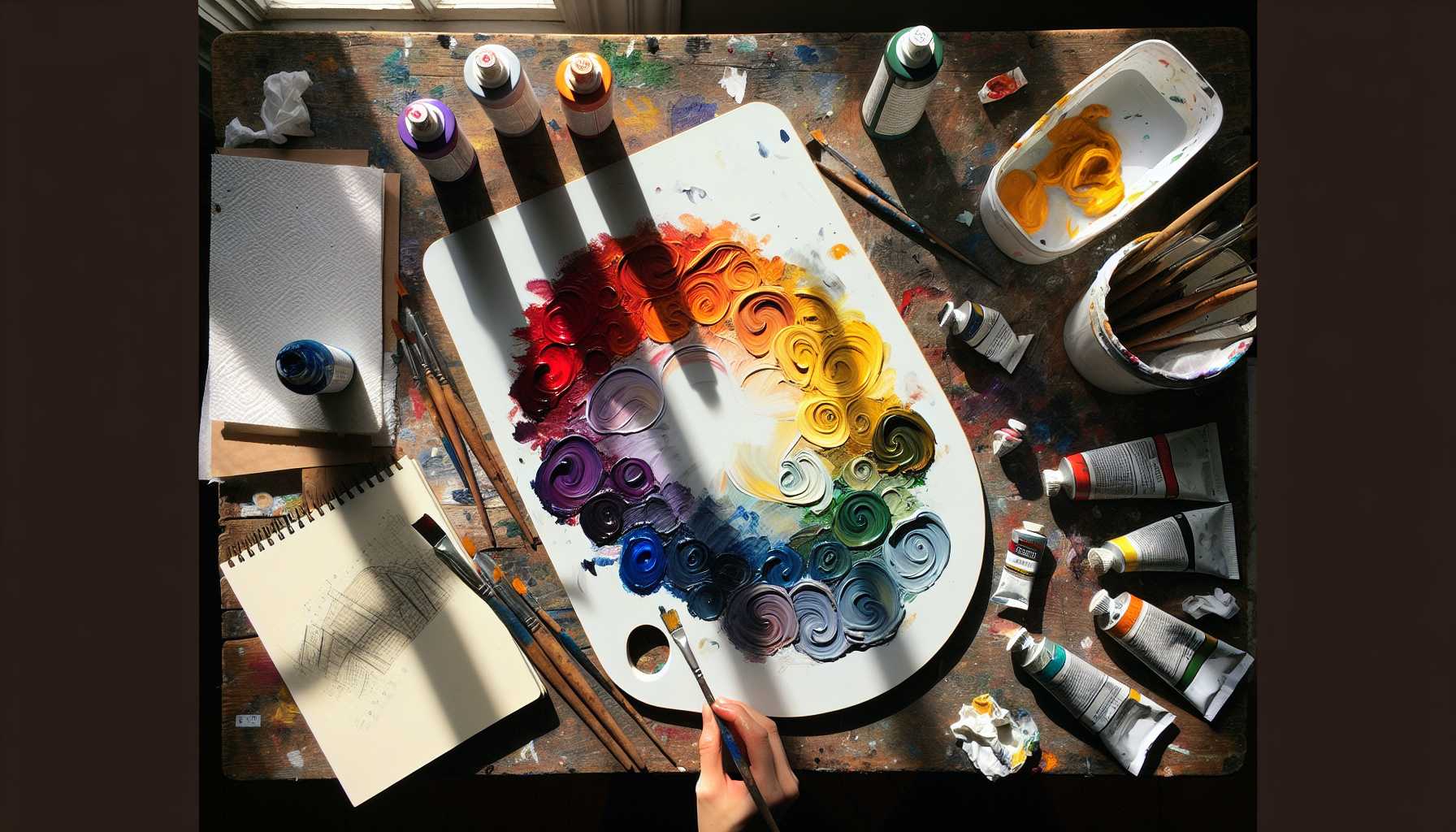
A Primer on Paint Mixing: A Beginner's Guide to Colour Combinations
As a fledgling artist, embarking on your painting journey may prove to be a daunting task. Fear not - all artists have to start somewhere. Among other things, mastering paint mixing is a thrilling skill you'll need to learn. In this article, we'll delve into the basics of paint mixing together.
Getting to Grips with Primary Colors
Let's begin with the basics. The primary colors are your essential tools.
There are three primary colors at your disposal:
- Red
- Blue
- Yellow
These colors can't be produced by blending other paints. Think of them as indispensable elements in your paint set.
Every other color is born through the combination of these three fundamental colors. It's nothing short of extraordinary, isn't it?
The Magic of Secondary Colors
Secondary colors are born when you merge two primary colors. It's absolutely magical!
This is how it works: - Red + Blue = Purple - Blue + Yellow = Green - Yellow + Red = Orange
Experiment with mixing equal quantities at first. The vividness of the resultant colors may surprise you.
Don't fret if your initial attempts result in dull colors. Remember, practice makes perfect!
Delving Deeper with Tertiary Colors
Want to push your skills to another level? That's where tertiary colors come into play.
These captivating colors are formed by combining a primary and a secondary color. This gives birth to six remarkable variants: - Red-orange - Yellow-orange - Yellow-green - Blue-green - Blue-purple - Red-purple
These colors add an extra dimension to your artwork and are ideal for crafting lifelike paintings.
Practical Tips for Paint Mixing
Start Small
Always start by blending small amounts first. You can always concoct more if you need it.
Wasting paint is a blow to both your budget and spirit. You can take my word for it!
Keep Your Brush Clean
Using unclean brushes can muddy your colors. Make sure to clean your brush after each mix.
Keep two containers of water within reach. Use one for cleaning the brush, and the other for fresh water.
Prepare More Than Required
Colors can look different when dry than when wet. Make sure you have mixed up enough paint.
Finding yourself short of paint midway through a painting is a situation all artists dread. Save yourself the unnecessary stress!
Note Down Your 'Recipes'
Did you manage to create a perfect hue? Document your mixing ratios.
Also, it's a good idea to take snapshots of your color swatches for reference. You'll pat yourself on the back for this later.
Hot vs Cold Colors
Getting your head around color temperature can be a gamechanger. Colors come alive with personalities!
Hot Colors
- Reds
- Oranges
- Yellows
These colors emanate energy and comfort. They stand out dynamically in paintings.
Cold Colors
- Blues
- Greens
- Purples
Cool colors exude tranquility and serenity. They usually seem to recede in artworks.
Mixing warm and cool colors can create a striking contrast. So feel free to play around with both!
Crafting Neutral Colors
While bright and bold colors are eye-catching, neutral colors are no less important.
Formulating Gray
Mix any of these complementary colors to yield gray: - Red + Green - Blue + Orange - Yellow + Purple
To lighten the mix, add some white. To darken it, add black.
Developing Brown
Creating brown is simpler than you might think: - Blend all three primary colors - Or mix a little black with orange - Or blend red, yellow and a tad bit of blue
Browns are ideal for portraying natural elements like trees or various skin tones.
Common Mistakes Made by Novices
We all stumble sometimes. The key is to learn from our blunders!
Overusing Paint
Use paint sparingly at the start. You can always add more color if necessary.
Failing to Do a Trial Run
Before applying it on your main artwork, always test colors on a random piece of paper first.
Blending Too Many Colors
Stick to mixing 2-3 colors. Mixing more often results in drab colors.
Ignoring Color Bias
Each paint has a slight color bias. For instance, Cadmium red has a slight lean towards orange, while Alizarin crimson tends to be more purple.
Bearing the bias in mind can help you blend cleaner colors.
Practical Exercises for Perfected Skill
Color Wheel Exercise
Try painting your own color wheel. Start with primary colors, then add secondaries and tertiaries.
This exercise helps build muscle memory around color relationships.
Gradient Practice
Try creating smooth transitional gradients between colors. This helpful practice will improve your understanding of color mixing ratios.
Monochromatic Studies
Try painting using only one color supplemented with white and black. This will enhance your understanding of color value and tonality.
Complementary Color Studies
Choose two opposite colors and explore their combinations. You'll uncover numerous delightful neutral variations.
Essential Tools for the Task
Basic Requirements
- Palette knife for mixing
- Flat mixing surface
- Paper towels
- Water containers
- Quality brushes
Recommended Paints
Starting with student-grade acrylics or watercolors is advisable. These options are economical and relatively forgiving.
Initially, invest in good primary colors. Everything else can follow in due course.
Enhancing Your Skills
Observe Nature
Nature is the best provider of color combinations. Use photos as references.
Take note of color changes under varying lighting conditions.
Grasping Color Theory
Understanding notions of complementary and analogous colors can significantly improve your mixing proficiency.
Practice Consistently
Practice your mixing skills daily for just five minutes rather than opting for weekend marathons. This will help build your skills quicker.
Network with Art Communities
Strike up connections with other beginners online. Share your color experimentation and learn from them.
Overcoming Common Problems
Muddy Colors
This generally occurs when you mix excessive colors or if your brushes are soiled.
Solution: Start afresh with clean tools and stick to mixing fewer colors.
Overly Bright Colors
To dial down the brightness, add a tiny amount of the complementary color.
Excessively Dull Colors
To perk up the color, add more dominant color or introduce a dash of undiluted primary color.
Paint Drying Too Quickly
Work on smaller sections at a time. If necessary, consider using a slow-drying medium.
Kickstart Your Paint Mixing Adventure
Bear in mind, every master artist was once a novice. Therefore, be patient with yourself.
Color mixing is as much a scientific process as it is an art. The mechanics offer the foundational knowledge, but your creativity injects uniqueness.
Starting with simple exercises focusing on primary and secondary colors would be beneficial.
Document your successful experiments and learn from your mistakes. Both have important lessons to offer.
Most importantly, enjoy the process! The aim of color mixing is to evoke joy, not stress.
Your distinctive style will naturally evolve with practice and exploration.
Now, pick up your brush and start blending! Your exciting, colorful journey begins today!
What colors are you most excited to create? The possibilities are limitless - and all just waiting for you to unearth them.