Digital Art Integration: Mixed Media Painting Guide 2026
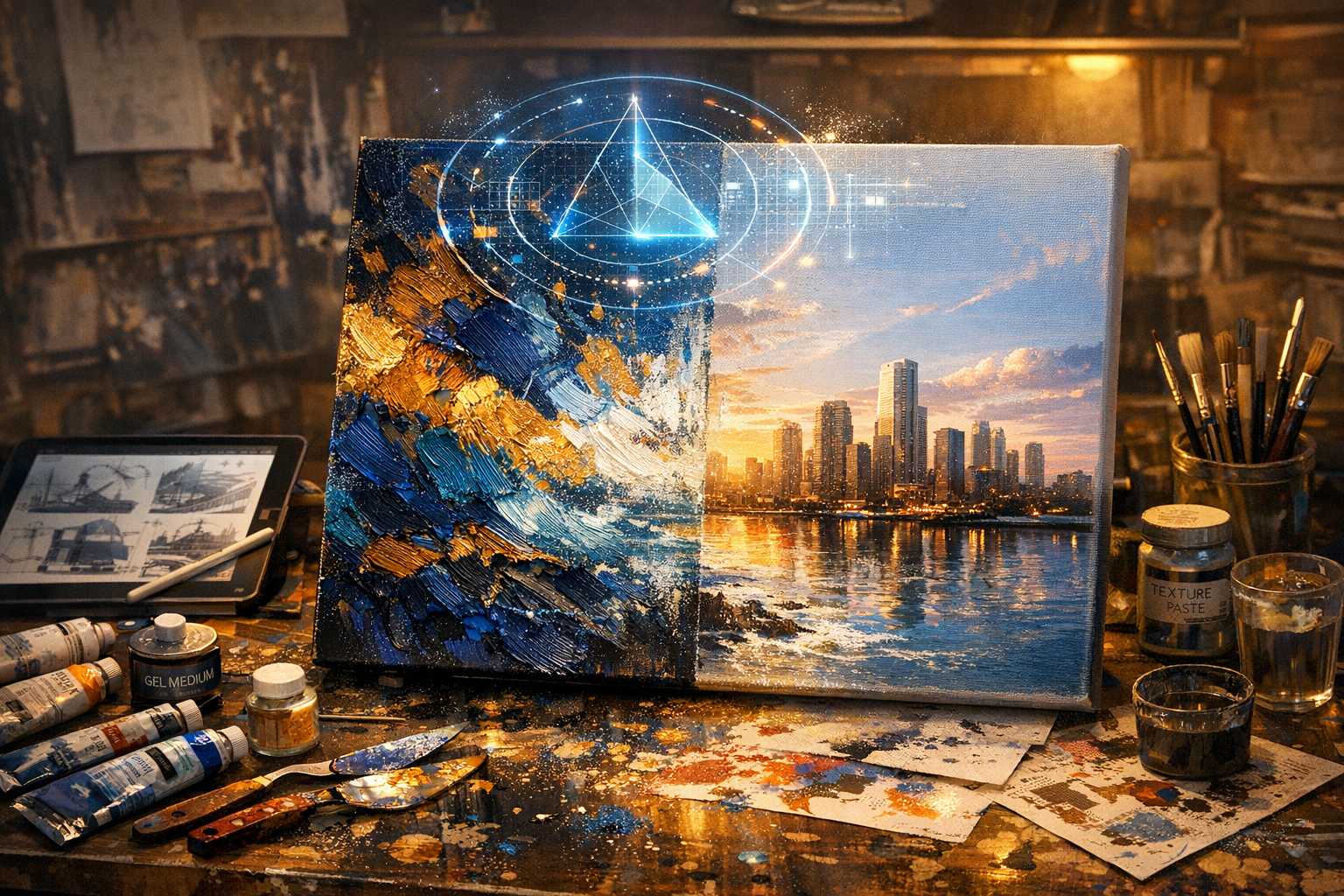
Merging Digital & Physical Art: A Comprehensive Guide to 2026 Mixed Media Painting
Rapid innovations in the art industry are transforming historical painting techniques, merging them with ground-breaking digital technology. These technological advancements enable the creation of remarkable mixed media art pieces that were unimaginable a few years ago.
Understanding Digital Art Integration
Digital Art Integration is an artistic method that blends traditional painting approaches with digital components. It provides a harmonious balance between the sensual experience of physical paint and the infinite options of digital technology.
This method allows artists to print digital visuals onto canvas, paint over photographs, and even project digital images while performing live painting. The potential is limitless.
Essential Resources for Mixed Media Art Mastery
Necessary Digital Equipment
Your smartphone could be unbelievably advantageous. Current phones capture high-quality photographs, and tablets are perfect for swift digital sketches.
A quality printer can revolutionize your art. Opt for printers providing archival quality inks. For larger formats, local print shops can be effective.
In the digital age, projectors have become quite reasonable. You can directly project your digital sketches onto your canvas using them.
Preferred Traditional Art Supplies
Acrylic paints tactfully integrate with digital prints, as they dry swiftly and leave the prints undamaged. Although Watercolors are also an option, precaution is necessary due to potential water damage.
Gel mediums act as a bonding agent, making digital prints adhere to the canvas flawlessly. Matte medium, particularly, lowers the sheen from printed components.
Mixed media paper is compatible with numerous materials. Canvas is also an excellent choice, provided it is pre-treated appropriately.
Predominant Interweaving Techniques of 2026
Photo Transfer Approaches
Heat transfer is an easy, efficient method. After printing your digital art on transfer paper, it can be ironed onto fabric or specific prepared surfaces.
Gel medium transfers yield extraordinary results. Simply use a laser printer to print on normal paper, then use gel medium to transfer the image.
Digital Collage Methods
The initial step is to create your collage digitally, then print it out in high resolution. Subsequently, additional elements can be painted on top.
This approach is time-efficient, permits digital testings before using paint, and enables replication for practice.
Integration of Augmented Reality
AR is gaining traction within the art community. Artists can augment their traditional paintings with additional animations, sounds, or visual layers through phone applications.
Some artists conceal QR codes within their pieces which, once scanned, reveal extra digital content. This can be considered as embedding hidden surprises in your artwork.
A Methodical Approach to Integration
Envisioning Your Mixed Media Art
Commence with a defined concept. Sketch out which parts will employ traditional paints and which sections could benefit from digital elements.
Take references through photographs and prepare digital plans. Proper preparation can save numerous hours.
Preparing Your Working Surface
Proper priming of your canvas or paper is necessary. If printed elements are to be added, the surface should be smooth. Texturizing can be done later using paint.
Carry out preliminary testing of your materials. Experiment with a small section before dedicating the entire piece.
Creating Digital Components
Maintain your digital resolution high. Upsizing can negatively affect the quality of your work. Minimum 300 DPI (dots per inch) is recommended for printing.
Closely think about how the digital components will fuse with paint. Ensure to leave space for brush strokes and consider where colors will combine.
Merging Digital and Traditional Elements
Layer your work. Add paint, follow up with digital components and continue the cycle. This creates depth and unity.
Painting over digital prints shouldn't be feared. They too, are simply another layer in your artwork and should be treated like any other mixed media component.
Solving Frequent Complications
Issues with Color Matching
Display screens and print outputs often show colors differently. Special colors should undergo test prints to ensure accuracy.
Paint small color swatches beside printed parts. This assists in matching colors accurately. Consider lighting conditions as well.
Adhesive Challenges
Certain inks might not be compatible with paint. Do compatibility tests to avoid errors. Acrylic mediums usually act as a remedy for adhesion issues.
Allow sufficient drying time between layers to avoid peeling and cracking.
Technical Troubles
Ensure a backup of all digital contents. Unexpected failure of digital devices can occur, making cloud storage a reliable choice.
Learning basic color adjustments is essential. Photographs might require adjustments before printing.
Artistic Inspirations for 2026
Integration of Weather Data
Incorporate real-time weather data while painting outdoor scenes. Display temperatures through color intensity and demonstrate wind speed via brushstroke direction.
Social Media Inclusion
Develop artwork incorporating live social media feeds. Print recent posts and paint around them, making your art a historical snapshot.
Visualization of Music
Use applications that convert music into visual designs. Print these designs and paint interpretations of your favorite tunes.
Future Predictions
Art generation through AI is gaining popularity, soon artists could be creating custom digital components using descriptive language.
3D printed textured surfaces are being paired with painting, with certain artists even printing custom paintbrushes for exclusive effects.
Virtual reality sketching is rapidly improving, enabling artists to sketch in 3D space, followed by printing these sketches for traditional painting integration.
Initiate Today
Eschew the quest for perfect equipment. Your phone and a local print shop can instantly kickstart your journey.
Start with smaller projects. Experiment by painting over a printed photo or creating a digital background and painting figures on top.
Join digital communities. Other mixed media artists frequently share techniques. YouTube tutorials can guide you through specific methods.
Promote unrestricted experimentation. Mixed media art is celebrated for bringing rules of traditional art into question.
The blend of digital and traditional art isn't a passing fad, rather, it signifies the future of creative expression. Commence your exploration today, get ahead of the pack and remain ready for 2026.