Virtual Reality Painting: Modern Art Technology Guide
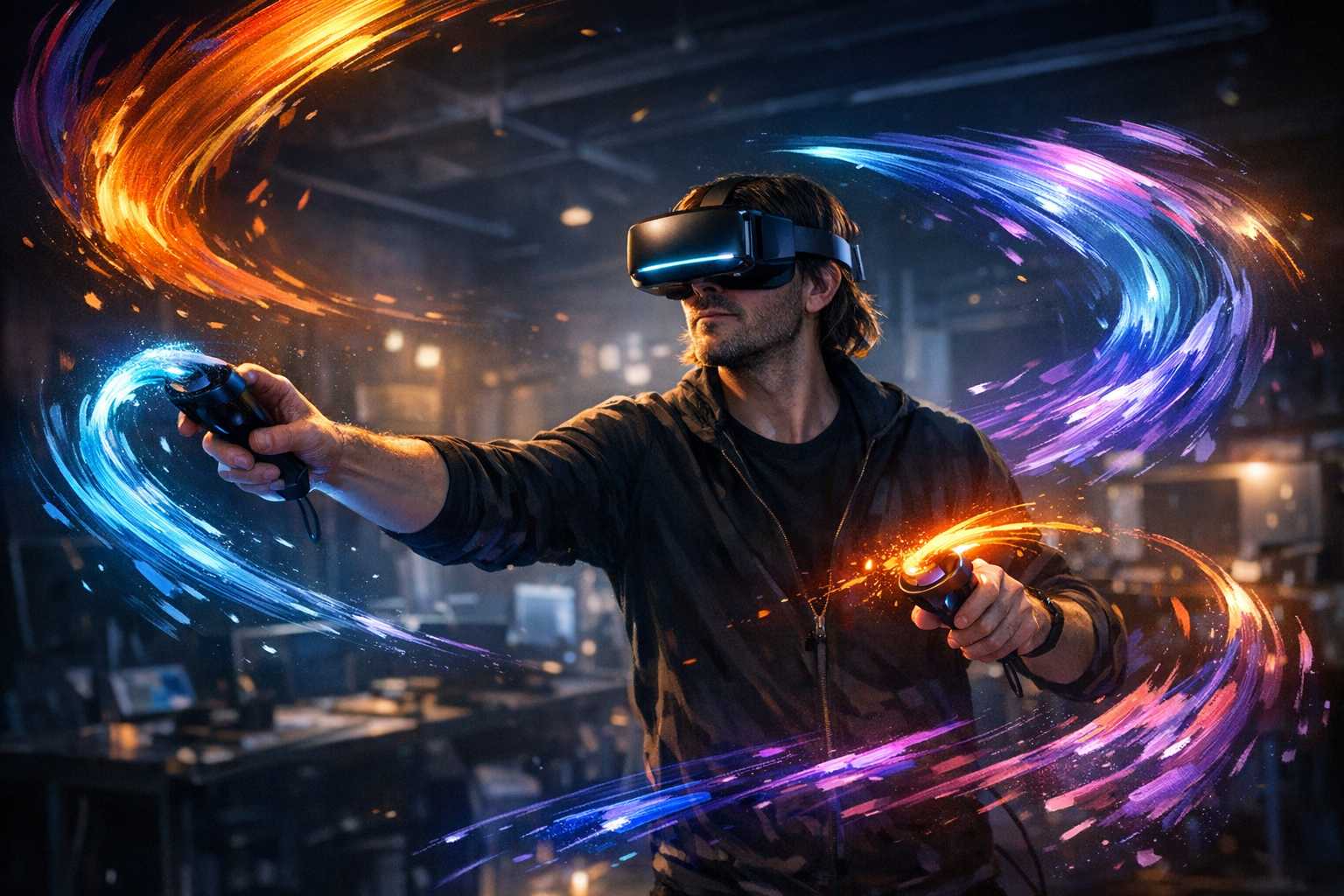
Exploring Virtual Reality Painting: A Current Art Technology Guide
Artistic expression has always been intertwined with advancements in technology. From the age-old cave paintings to the digital canvases of today, the modes of artistic representation have continuously evolved. Today, the dawn of virtual reality painting is changing the way art is created.
Imagine the possibility of painting in a three-dimensional canvas, crafting floating masterpieces in mid-air. No longer confined to the realm of science fiction, virtual reality art is now a tangibly thrilling reality.
Understanding Virtual Reality Painting
Virtual reality painting equips artists with the ability to craft their artwork in a three-dimensional digital canvas. Defying the usual protocol of conventional art, a VR headset and motion controllers are used instead of actual brushes, amalgamating to produce an encapsulating piece of three-dimensional art.
Transitioning from a flat surface to stepping inside your canvas, virtual reality painting liberates artists from the traditional constraints of art-making. Today, artists can mold with light and paint using the pure force of their imagination.
Necessary Equipment for VR Painting
Embarking on your virtual reality painting journey does not warrant breaking the bank. The basic equipment is pretty accessible.
VR Headsets Appropriate for Artists
The headset serves as a pivotal component for exploring the virtual art world, with popular options including:
- Meta Quest 2: An affordable, wireless option
- HTC Vive: Known for its exceptional tracking accuracy
- Valve Index: Comes with top-notch displays
- PICO 4: A budget-friendly alternative
Choose a headset that gels with your budget and comfort requirements.
Motion Controllers and Additional Accessories
Motion controllers transmute into your virtual brushes, efficiently tracking the movement of your hands. Some models may even bundle these controllers within their packaging.
Hand tracking technology is rapidly gaining traction. The process of painting with just your hands feels fascinating and intuitive.
Widely-used VR Painting Software
The software you eventually opt for plays a significant role in shaping your artistic journey. Each application boasts its unique features and art styles.
Tilt Brush (Open Brush)
Google's Tilt Brush led the way in revolutionizing VR painting. Now available as Open Brush, the software's simple and user-friendly interface allows you to create immersive art in no time at all.
Gravity Sketch
If you're into 3D design and sculpture, Gravity Sketch is your best bet. Although the learning curve is slightly steeper than other apps, the results are impeccable and intricately precise.
Adobe Medium
Adobe Medium, with its seamless integration with other Adobe products and professional-grade sculpting tools, is a perfect choice for artists already using Adobe software.
Masterpiece VR
Masterpiece VR comes with a unique emphasis on collaborative creativity, allowing multiple artists to conjure masterpieces in a shared virtual space.
Why VR Painting?
Virtual reality painting offers a distinct set of benefits that traditional art can scarcely contend with, attracting growing numbers of artistic enthusiasts around the globe.
Unfettered Creative Freedom
The laws of gravity cease to apply in the domain of VR, offering limitless possibilities of colourful representations and effects. More importantly, taking risks and experimenting become an exciting journey minus the dread of wasted canvases or expensive paints going down the drain.
Full-fledged Three-dimensional Artworks
Unlike traditional paintings, VR artworks are fully dimensional and immersive, providing viewers a chance to experience your creations from every possible angle.
Economical Artistic Creation
Once you get your hands on VR equipment, the lure of essentially limitless and cost-free art materials becomes too good to resist. Digital storage keeps your expansive art collection effortlessly organized.
Inclusive Design
VR painting includes features that could prove to be useful to artists with physical disabilities. Apart from hand-tracking options that adapt to various levels of mobility, some artists may find VR alternatives to be more user-friendly and comfortable than traditional art mediums.
Embracing VR Art: A Beginner's Guide
Taking baby steps towards familiarizing yourself with VR art does not need to be an overwhelming affair. Start slow and work on improving your skill set gradually.
Starting Out
A free app like Open Brush is perfect for beginners. Initially, just play around with the interface rather than focusing on creating intricate masterpieces.
Be sure to get comfortable with the 3D environment and follow a steady learning curve before venturing into complex art forms. Consistent practice remains the key to mastering the controls.
Mastering Basic Techniques
Beginners could follow a variety of learning approaches like practicing smooth brush strokes, importing photos to maintain accuracy, and painting at different scales for an in-depth understanding of proportions.
Honing VR Art Skills
Online VR communities can provide an excellent platform to share your work and receive valuable feedback. Further, the availability of VR art tutorials on YouTube can help beginners grasp the nuances. Regular practice works wonders in improving your skills.
Professional Applications of VR Painting
VR painting is rapidly expanding beyond the hobbyist domain. Various industries are progressively adopting this evolving technology.
VR in Entertainment Industry
In the realm of entertainment, VR technology is being used extensively for conceptualization and planning. Movie directors are using this technology to plan scenes before filming them, thereby saving considerable time and money.
Educational Applications
Institutions specializing in art education are introducing VR painting courses. Given the cost-free aspect of materials, students can experiment without feeling restrained. There also are innovative possibilities of learning in shared virtual spaces as well as creating realistic experiences.
Therapeutic Uses
In the domain of healthcare and wellbeing, art therapy programs are integrating VR painting into their routines. Its immersive nature allows patients to achieve focus and relaxation. Furthermore, it's used in physical rehabilitation programs for patients to regain fine motor skills.
Current Challenges and Limitations of VR Painting
Despite the consistent improvement and evolution of VR painting technology, there are still some challenges and limitations to be aware of.
Technical Limitations
Even though the innovations in VR technology are impressive, it still has some limitations. Use of headsets for long duration can cause eye discomfort. Resolution and precision of visualization is yet to achieve perfection. Hand tracking technology, while promising, sometimes lacks accuracy.
Overcoming the Learning Curve
The transition from conventional 2D to virtual 3D can take some time. VR interfaces can be difficult to master, especially if you're accustomed to traditional art software. Sometimes, users might also experience motion sickness during early usage.
Future Landscape of VR Art Technology
The future pilots of VR painting technology hold extremely promising prospects, opening doors to emerging technologies and elevating their possibilities.
Emerging Technologies
Technologies such as haptic feedback will allow artists to feel the texture of the virtual paint, adding crucial tactile information to the process. With AI assistance and improved resolution, artists will be more empowered to craft their work.
Future Predictions
The future will see VR art galleries becoming more mainstream, enabling buying and selling of virtual artworks. With the rise of NFTs, the market for digital art is only expected to grow. Educational institutions will likely integrate more VR art training into their curriculum.
Tips for Success with VR Painting
Succeeding in VR painting requires a blend of consistent practice and intelligent approaches.
Key Points for Beginners
For beginners, starting with simple subjects and saving your work frequently is important. Taking regular breaks is critical to prevent overexertion and to give your eyes and body the necessary respite.
Advanced Techniques
For advanced users, learning keyboard shortcuts and experimenting with different brush sizes will enable a more efficient and enriched working experience.
Wrapping Up
Virtual reality painting signifies the thrilling future of art. Allowing boundless creative possibilities, this technology is a benediction for both professionals and hobbyists.
Despite the learning curve, the rewards are vast. It allows you to do much more than creating pictures. You can construct entire virtual worlds, with your imagination being the sole limit.
So, start your VR painting journey today. Download free software, start experimenting, and embrace the future of art. Remember, every successful artist starts their journey as a beginner. Embrace this unique technology and mold it to create something truly beautiful and distinctively yours.