Alcohol Ink Fluid Art: Complete Technique Guide 2026
The Complete Guide to Alcohol Ink Fluid Art for Aspiring Artists in 2026
Have you ever been captivated by the mesmerizing dance and blend of colors? This is what makes alcohol ink fluid art so intriguing. This enchanting art form has seized the hearts of many across the globe. Let's demystify everything you need to become proficient at producing beautiful alcohol ink masterpieces.
Decoding Alcohol Ink Fluid Art
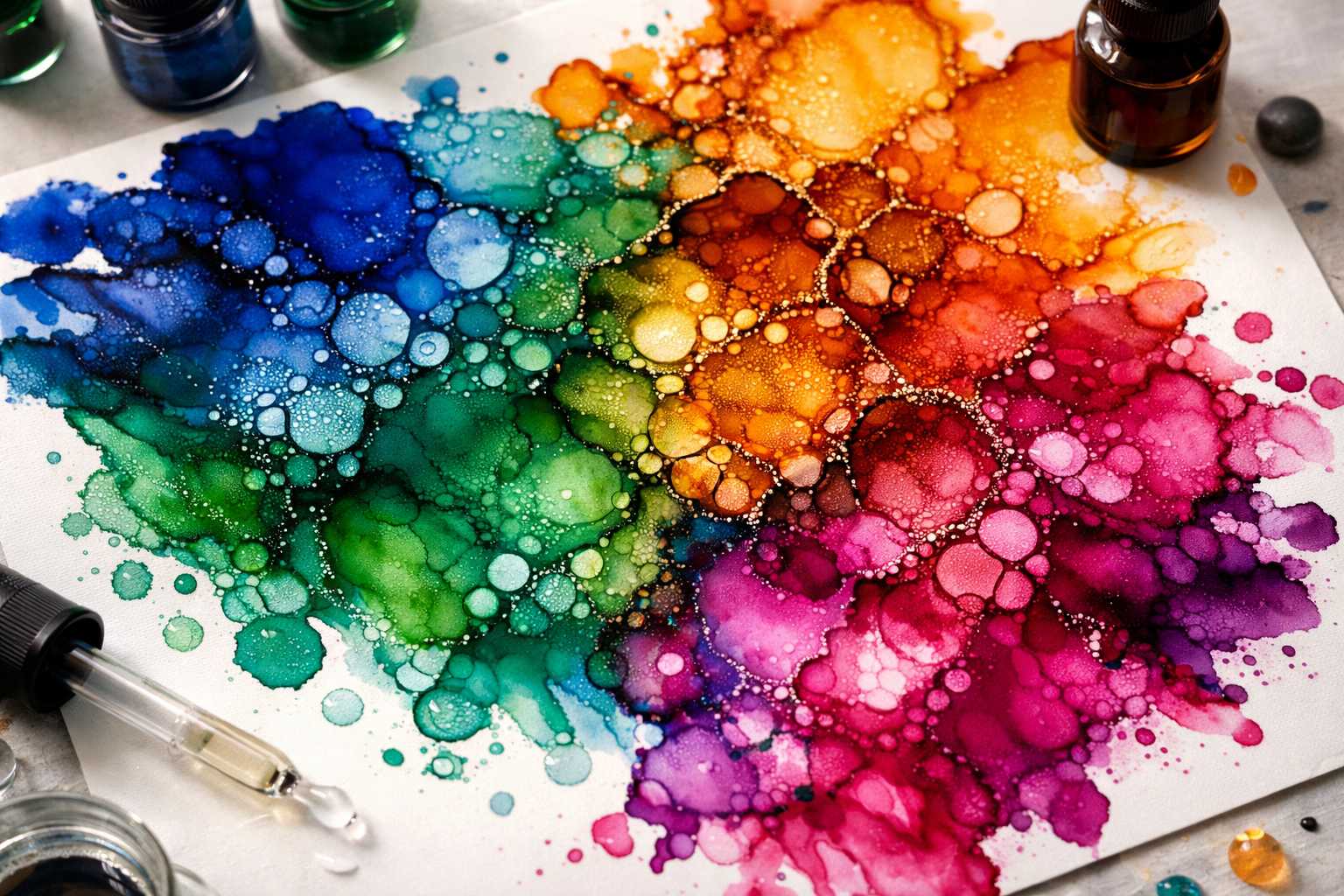
Alcohol ink fluid art utilizes quick-drying, richly color-saturated inks. On non-porous surfaces, these potent inks create vibrant, free-flowing formations. The alcohol base prompts the colors to mingle and fuse organically, resulting in unexpected and gorgeous outcomes.
Artists treasure this medium due to its wonderful unpredictability. The final result is always a unique surprise, making each artwork a novel exploration.
Gathering the Essentials
Fundamental Supplies You'll Need
Embarking on the alcohol ink art journey doesn't demand luxurious equipment. Below is a basic shopping checklist:
- Alcohol inks (start with 3-5 fundamental colors)
- Isopropyl alcohol (91% is most effective)
- Non-porous canvases (Yupo paper, ceramic tiles, or glass)
- Felt applicators or makeup sponges
- Blending solution
- Disposable gloves
- Paper towels
Advanced Tools for Experimental Techniques
As you become more engrossed in this art form, explore these additional tools:
- Air compressor or canned air
- Dropper bottles
- Heat gun
- Alcohol markers
- Metallic mixatives
- Assorted brushes
Laying the Groundwork: Fundamental Alcohol Ink Techniques
The Drop and Spread Method
This fundamental method forms the basis of alcohol ink art. Apply ink onto your canvas, observing as it spreads naturally. Introduce other colors while the first is still moist.
The opposing inks will surge and withdraw against each other, forming natural, cell-like motifs. It's akin to observing nature unfold on its canvas.
Techniques Involving Blowing
Use a straw, air compressor, or your breath to influence the ink's movement. This generates fluid, wind-like effects. Soft puffs result in delicate shifts, while firm bursts create dramatic lines.
Experimenting with different air pressures yields unique outcomes.
Ink Lifting and Removal
Isopropyl alcohol is an effective tool for removing alcohol ink. Utilize this feature to produce highlights on dried ink and add depth and interest to your artwork.
Use cotton swabs for precision lifting and paper towels for broader, softer effects.
Color Interplay in Alcohol Ink Art
Grasping Color Dynamics
Alcohol inks don't blend in the same way traditional paints do. They're fluid and translucent, implying colors overlay and interact in unique ways.
Vibrant mixtures are created using primary colors (red, blue, yellow). Complementary colors generate fascinating contrasts. Analogous colors blend harmoniously.
Crafting Depth through Layering
Build your masterpiece in layers. Start with lighter hues and gradually introduce darker tones to naturally generate depth and dimension.
Allow each layer to dry thoroughly before advancing to prevent colors from becoming muddy and to ensure vibrancy.
Expanding Your Skills: Advanced Alcohol Ink Techniques for 2026
Assorted Methods for Texture Creation
Modern alcohol ink artists are testing the medium's limits. Try these popular techniques:
- Texturing with salt: Distribute salt on damp ink for organic formations
- Plastic wrap impressions: Press plastic wrap into damp ink, then remove
- Bubble technique: Produce bubbles through an ink-colored solution
Combining Art with Technology
In 2026, technology enhances traditional art. Many artists opt to digitally manipulate photos of their work. Others use alcohol ink to create backgrounds for mixed media projects.
Consider the many ways your alcohol ink work can transition to digital formats, providing new avenues for prints and merchandise.
Evasion of Common Errors
Rushing Through the Process
Alcohol ink dries rapidly. However, haste can lead to messy results. Pause between color applications and allow the inks to move naturally.
Good art takes time. Trust the process.
Misappropriation of Surfaces
Not all canvases are suitable for alcohol ink. Porous materials absorb the ink strongly, thwarting the desired fluid effects.
Non-porous surfaces yield the best results, with Yupo paper being the ideal choice for beginners.
Over-Development of Your Piece
Avoid the temptation of being excessive in adding and adjusting. Remember, the beauty of alcohol ink art lies in its spontaneity. Learn when to step back.
Frequent pauses to review your piece with fresh eyes can be beneficial. Sometimes, less is more.
Preservation and Presentation of Your Artwork
Safeguarding Your Pieces
Alcohol ink can reactivate upon coming into contact with alcohol. Shield your completed pieces with suitable sealers.
UV-resistant varnishes are effective as they safeguard colors from fading. Ensure coatings are thin and uniform for the best outcome.
Proper Conservation Techniques
Store uncompleted artworks flat, away from heat and direct sun exposure. Glassine paper can be used between canvases to prevent sticking.
Completed and sealed artworks can be traditionally framed. Just make sure there is proper ventilation during the sealing process.
Overcoming Common Difficulties
Colors Appear Murky
This usually occurs due to excessive color mixing. Keep your color palette minimal — using 3-4 colors per piece suffices. Make use of a blending solution to create some breathing room between colors.
Poor Ink Flow
Ensure you're using a high percentage - the optimal one is 91% isopropyl alcohol. Lesser percentages contain too much water.
Also, make sure your canvas is impeccably clean. Even minor oils can hinder proper ink flow.
Upcoming Project Inspiration for 2026
Create Useful Art Items
Infuse common items with the charm of alcohol ink:
- Coasters and trivets
- Phone cases
- Jewelry pieces
- Bookmarks
Large-Scale Installations
Think big in 2026. Design wall murals using alcohol ink techniques on suitable canvases. Carefully select your color scheme for cohesive results.
Integrate with Other Art Forms
Marriage of alcohol ink with other art forms:
- Use as backdrops for watercolor compositions
- Craft textured surfaces for acrylic work
- Incorporate ink into resin art projects
Cultivating Your Alcohol Ink Art Practice
Carving Your Style
Every artist develops their distinctive approach with time. Experiment with various techniques regularly and maintain an art journal to record successful methods.
Learn from others, but don't exactly replicate them. Use their work as inspiration instead to nurture your individual voice.
Sharing Your Art Online
Social media platforms appreciate the colorful allure of alcohol ink art. The fluid dynamics make for bewitching photography. Share videos detailing your creative process to captivate audiences.
Increase your reach by using popular hashtags, and engage with other artists. A supportive community can greatly enrich your creative journey.
Anticipating the Future of Alcohol Ink Art
Exciting Prospects for 2026
The alcohol ink art community continues to evolve with emerging trends. New products are continually being introduced, and eco-friendly inks have gained momentum. Artists are gravitating towards more sustainable options without compromising on quality.
Documenting the creation process digitally has become standard practice — many artists produce time-lapse videos of their work. These educational videos not only build a following, but can also serve as income sources.
Opportunities for Professional Engagement
Alcohol ink art is receiving commercial acclaim. Interior designers seek custom made pieces for their projects, and art collectors acknowledge and appreciate this medium's distinctive qualities.
Reflect on ways to monetize your skill: teaching workshops, crafting custom pieces, and selling prints are all viable options.
Taking the First Steps
Your Inaugural Practice Session
Ready to plunge? Start simple. Opt for two complementary colors and a blending solution. Familiarize yourself with basic drops and spreads.
You don't need to create a masterpiece right away. Concentrate on comprehending the peculiarities of the medium.
Progressing at Your Pace
Master the basics before progressing to more advanced techniques. Give ample time and attention to each method. A sturdy groundwork in the basics will prevent future frustrations.
Online communities can provide a base for networking, inspiration, and technical support. Engaging with fellow artists can offer unique tips and encouragement.
Conclusion
Endless creative possibilities await with alcohol ink fluid art. The spontaneous and unpredictable nature of the medium keeps every session exciting. Whether you seek a relaxing pastime or an artistic challenge, alcohol ink satisfies both.
Start with elementary supplies and straightforward techniques, and gradually build up your skills. Most importantly, enjoy the ride. In alcohol ink art, the journey is just as fulfilling as the destination.
Remember, every master was once an amateur. Your unique artistic voice will naturally develop as you practice and experiment. Welcome to the enchanting realm of alcohol ink fluid art.