Night Scene Painting: Impressionist Nocturne Guide
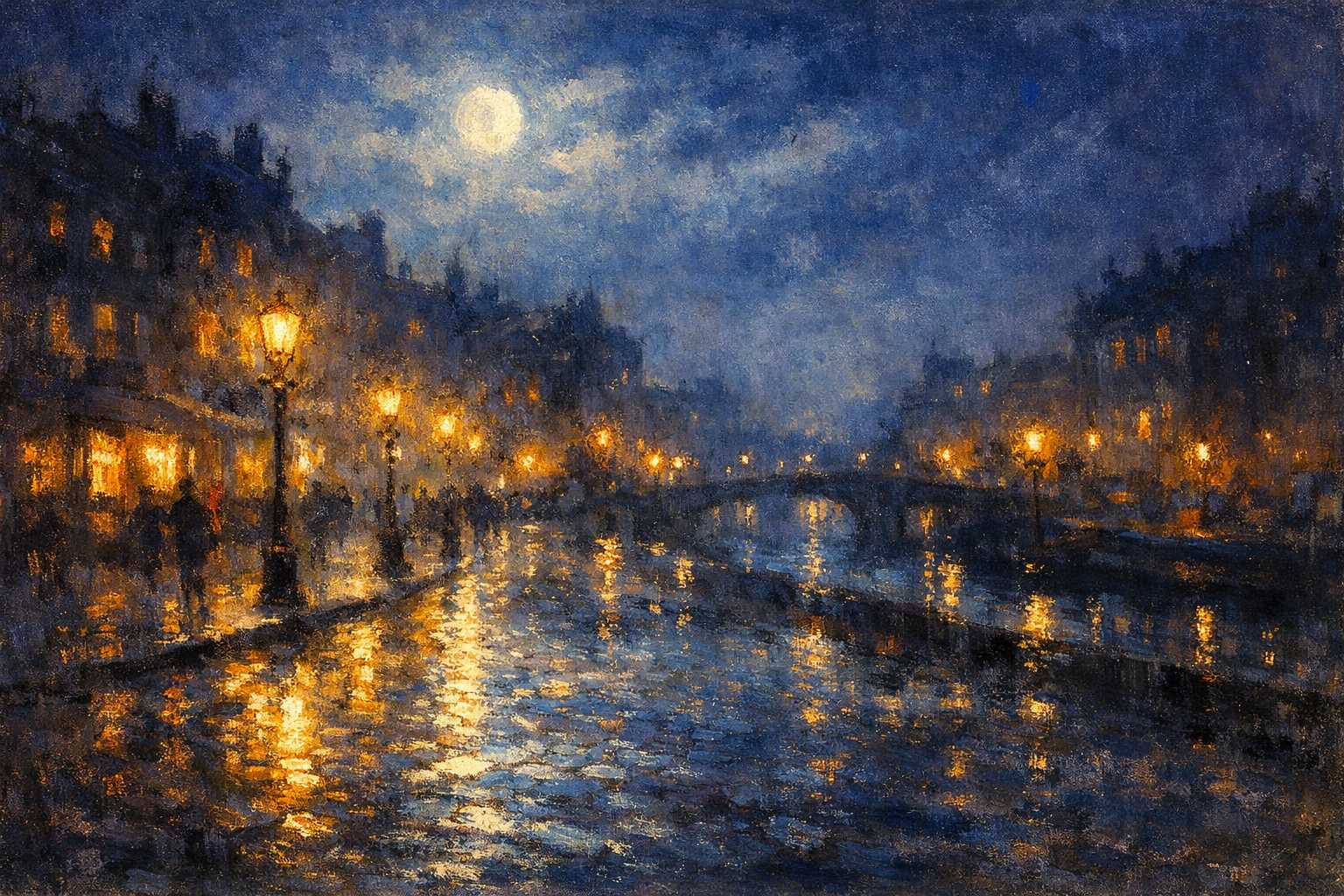
A Guide to Impressionist Night Scene Painting: The Charisma of Nocturnes
Do you find yourself captivated by the beauty of a moonlit night, yearning to recreate this magical atmospheric painting? Painting night scenes provides the perfect opportunity for artists to delve into the universe of impressionist nocturnes, exploring the mysteries of mood and shadow play. Let's dive into this intriguing world together.
The Unique Charm of Nocturne Painting
Night painting, or nocturne, as artists commonly refer to it, offers distinctive challenges and rewards. The limited light sources yield contrasting shadows and highlights creating a dramatic canvas. Color interactions become unpredictable, with them blending and shifting in surprising ways.
Impressionist masters like Claude Monet and James McNeill Whistler were the forerunners of this artistic technique. They painted night scenes not as shades of black or gray but with a palette of subtle purples, deep blues, and warm amber, adding an unexpected vibrance to darkness.
Essential Approaches for Nocturne Painting
Initiate with Value Sketches
Before delving into the spectrum of colors, create straightforward value studies using black, white, and gray. This will help you comprehend where the light touches and where shadows rest.
Firstly, define your darkest and lightest areas. Everything else will be mapped in between these extremes. This groundwork will enhance the believability of your nocturne painting.
Mastering Sparse Light Sources
Nocturnes typically do not feature as many light sources as daytime landscapes. Elements like street lamps, moonlight, or lights from windows become focal points. Different light sources impact the surrounding area differently.
Artificial lights spread warm hues of yellows and oranges, while moonlight leans towards cool blues and silvers. Recognizing these variations can help create a true-to-life nighttime ambiance.
Employ Soft Edges
In conditions of low light, sharp edges lose their crispness. Objects seem to blend into shadows. Using smooth brush strokes can simulate the way our eyes perceive objects in the nighttime.
This technique instills the dreamy, impressionist quality that we appreciate in nocturnes. Your audience will feel as though they are standing right in the scene you have painted.
The Perfect Palette for Nocturne Painting
Cool Shades with Warm Highlights
Most successful nocturnes predominantly feature cool colors. Colors like Prussian blue, ultramarine, and violet naturally evoke a night scene.
Introduce warm accents sparingly for maximum contrast. A golden window beam or an amber streetlight creates appealing contrast against a cool backdrop.
Avoid Over-Using Black
Novice artists often choose black paint to start their work. Avoid this temptation. True shadows contain reflected light and offer subtle color variations.
Instead, mix your dark shades using contrasting colors. Experiment with mixtures of deep purple and dark green or combinations of burnt umber with ultramarine blue for a more captivating outcome.
Taking Inspiration from Impressionist Masters
Claude Monet's Series of Rouen Cathedral
Monet repeatedly painted the Rouen Cathedral under various scenarios and lighting conditions. His nighttime renditions display the transformation of familiar subjects under artificial lighting.
Explore how he crafted the interaction between the warm interior church light and the cool evening air, featuring bold brushworks and confident color selections.
Whistler's Nocturnes
James Whistler was essentially the founder of the artistic nocturne genre. His works, imbued with a musical and atmospheric quality, emphasized capturing the overall mood rather than fretting over intricate details.
Whistler's oeuvre teaches us that successful nocturne painting prioritizes emotional resonance over literal presentation. It's more about encapsulating the essence of the night, rather than just its physical characteristics.
Practical Pointers for Crafting Nocturnes
Use Photo References
Nighttime outdoor painting poses its challenges. The lack of proper visibility can cause difficulties in color blending, and painting in unfamiliar locations brings safety concerns.
Use photos for reference taken during your chosen evening hours. Get several exposures to accurately record both shadows and light sources.
Keep Your Composition Simple
Nighttime naturally hides superfluous details, allowing you to focus on key shapes and notable light sources.
Over-detailing can undermine the enigmatic element that amplifies the beauty of nocturnes. Oftentimes, less information intensifies emotional depth.
Gradual Color Layering
Develop your nocturne painting steadily, starting with thin, see-through layers. Progressively add opaqueness, mostly in highlighted areas.
This stratum technique replicates the actual behavior of light at night, where distant objects appear more transparent while illuminated subjects seem substantial.
Common Pitfalls to Steer Clear From
Excessive Illumination
Novice artists tend to over-illuminate their night scenes, concerned that viewers might miss out on important details. However, implicit suggestion often conveys more than overt description.
Allow some areas to merge with the darkness, letting audiences' imagination fill in the blank spaces. This interaction makes your artwork more engaging.
Overlooking Reflected Light
Light reflects off surfaces even in nighttime. Pale pavement reflects the moon's glow upward, and building walls catch the radiance from nearby streetlamps.
Incorporating these subtle reflections adds authenticity to your nocturnes. It also opens up possibilities for intriguing color temperature differences.
Discover Nocturne Inspirations
Urban Sceneries
Cities are rich with nocturne inspirations. Streetlights form dramatic light wells, neon signs add bursts of color, and wet pavements reflect every light source.
Experiment with both bustling intersections and quiet alleyways. Each urban setting imparts different vibes and poses unique technical challenges.
Natural Landscapes
Don't disregard the beauty of rural night scenes. Moonlit landscapes possess a calm, serene beauty. Stars act as subtle points of reference, and silhouetted trees create compelling shapes against twilight skies.
Water bodies, such as lakes, make particularly interesting subjects, as they reflect and disperse light in intriguing patterns.
Enhancing Your Nocturne Painting Skills
Frequent Practice
Just like any artistic technique, nocturne painting too refines with consistent practice. Allocate time every week for nocturne experiments. Keep them compact and address specific challenges.
Experiment with painting the same scene at different evening hours, observing the color and value evolution as the darkness magnifies.
Learn from Traditional and Modern Artists
Besides the impressionist masters, seek inspirations from contemporary nocturne painters. Each artist brings a unique perspective and fresh insights to nighttime subjects.
Participate in online art communities specializing in landscape or nocturne painting. Share your creations and gain insights from others' experiences.
Wrapping Up
Painting night scenes opens up a universe of artistic exploration. The impressionist approach to nocturnes encourages us to look beyond literal darkness and embrace elusive colors, dramatic contrasts, and profound emotional depth.
Start with simple subjects and elementary techniques, building up your skills slowly. Above all, trust your artistic instinct while portraying the enigma of night scenes.
Bear in mind that successful nocturnes emphasize the mood over minutiae, inviting viewers into contemplative spaces shrouded in mystery. With persistence and patience, you'll develop your personal style of night scene painting.
Remember, your next evening stroll could serve as an inspiration for your debut nocturne masterpiece. Stay alert for those special moments when the interplay of light and darkness creates an enchanting effect.