Japanese-Inspired Minimalist Art: Painting Guide 2026
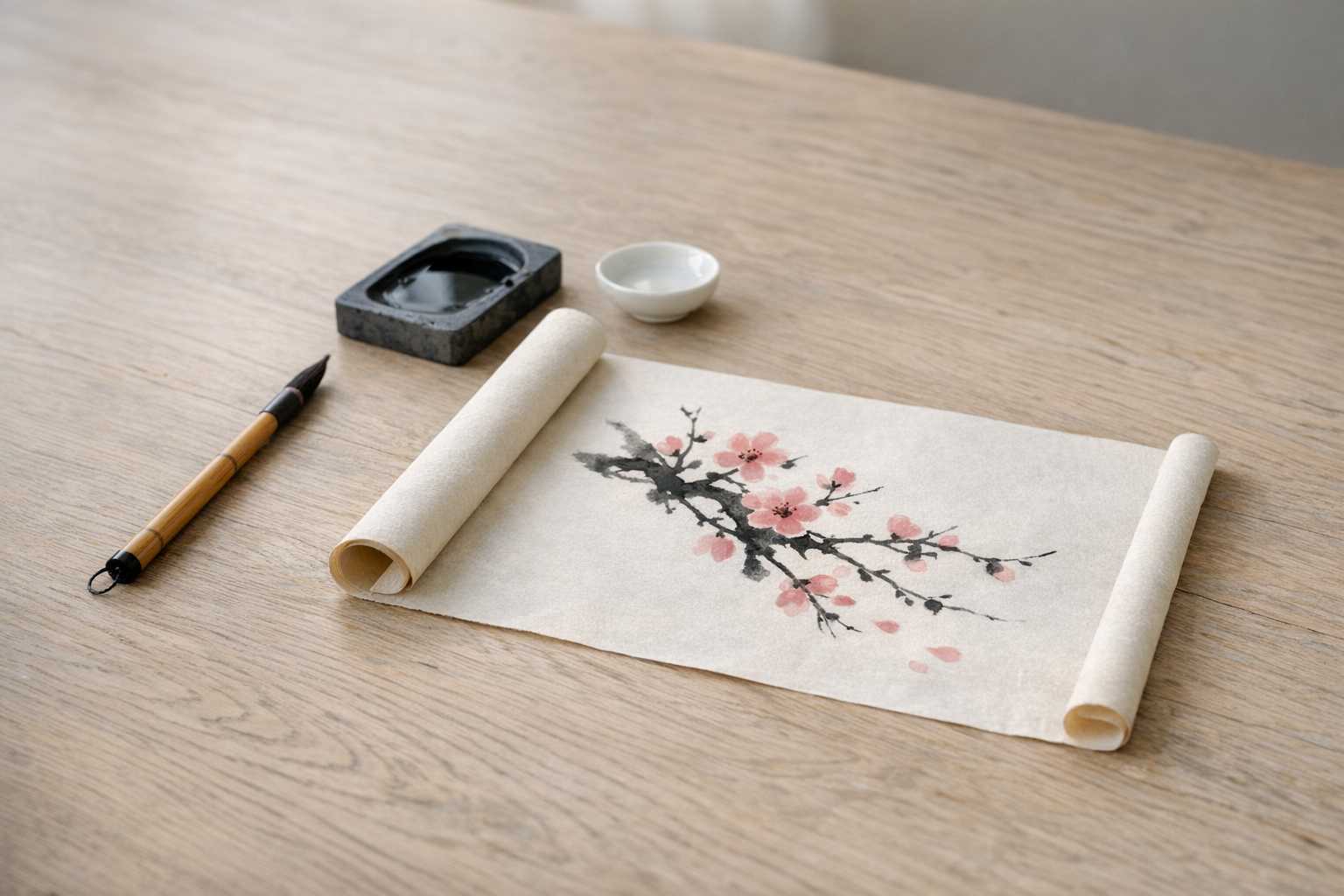
The Art of Minimalism: A Guide to Japanese-Inspired Painting in 2026
Are busy artworks and cluttered spaces overwhelming? Japanese minimalist art might be the answer. This ancient philosophy, now incorporated into modern painting techniques, offers serenity in the midst of our disorderly world.
For over five years, I have been immersed in the world of Japanese-inspired minimalist painting. Today, I'll be your guide to understanding and practicing this beautiful art form.
Identifying the Philosophy of Japanese Minimalism
Japanese minimalism isn't restricted to employing fewer colors. Rather, it represents a total shift in mindset.
The principle of "ma" (negative space) is pivotal. These vacant spaces aren't absent features - they form an intentional space for visual pauses in a painting, much like in a conversation.
"Wabi-sabi" helps us appreciate the beauty in imperfections. An uneven brushstroke isn't a flaw. It's what makes your painting unique.
Mastering the art of conveying more with less is effectively achieved by Japanese artists. A single cherry blossom branch could depict a whole spring season.
Essential Materials for Japanese-Inspired Minimalist Painting
Even when it comes to tools, Japanese minimalism upholds simplicity, so expensive supplies aren't a necessity.
Basic brush collection: - One large flat brush for creating washes - A pair of round brushes of medium and small size - One fine liner brush for intricate details
Essential color palette: - Black (either sumi ink or acrylic) - White (for mixing and highlighting) - Raw umber - Prussian blue - A warm color, preferably burnt sienna or cadmium red
Paper options: While rice paper lends authenticity, watercolor paper is an excellent choice for beginners.
Also, a small spray bottle is of key importance to regulate the moisture levels, a significant aspect of this art form.
Color Theory in Japanese Minimalist Art
Less is indeed more when selecting colors. Traditional Japanese paintings make use of only two or three colors.
Monochromatic schemes work wonderfully. Start with varying shades of gray. Add an accent color for an interesting effect.
Earth tones forge connection with nature. Browns, grays, and toned-down greens create harmony. These colors are often prevalent in traditional Japanese art.
Employ the 70-20-10 rule for a balanced composition. Dabble 70% of your main color, 20% of your secondary color, while limiting your accent color to the remaining 10%.
Black and white combinations never go out of style and are capable of creating a dramatic contrast while ensuring simplicity.
Basic Techniques and Brushstrokes
Japanese minimalist painting relies on the assurance and flow of your movements. Any hint of hesitation might be evident in your brushstrokes.
Start by perfecting the wash technique. Fill your brush with diluted paint and apply it in smooth, consistent strokes across your surface.
Try out dry brush techniques. Remove excess moisture from your brush and glide it on textured paper for intriguing effects.
Understand the "bone method" brushstroke. This technique creates strong, structural lines. Start with a firm press and gradually decrease pressure.
Adopt the "flying white" technique. Swift, light strokes allowing the white paper to show through, add texture and movement.
Warm-up with ten minutes of brushstroke practice at the beginning of each painting session. Repetition promotes muscle memory.
Creating Dimension with Negative Space
Negative space lets Japanese minimalist art breathe. It's not void but a canvas full of potential.
Plan your negative spaces intentionally. Lightly sketch out areas you want to remain empty. These areas carry equal importance as the painted portions.
Employ the rule of thirds for negative space. Off-center your main subject and let the negative space balance the composition.
Add variation to negative space sizes. Large empty areas add visual drama, and smaller spaces lend rhythm and flow to the artwork.
Interconnect the negative spaces throughout your painting. They should flow together, mimicking a river system.
In my experience, careful planning of negative space often demands more time than deciding the subject of the painting.
Subject Matter and Composition
Traditional Japanese art appreciates the simplistic beauty of nature. You don't need complex subjects to create impactful paintings.
Single flowers make stimulating subjects. A single lotus bloom can inject an entire canvas with meaning.
Mountain silhouettes yield great results. Simple shapes contrasting an empty sky create peaceful imagery.
Water elements foster tranquility. A small stream or pond reflection brings minimalist compositions to life.
Avoid symmetrical arrangements. Asymmetry cultivates a more engaging visual flow.
Employ the "less than half" rule. Your main subject should occupy less than half of your canvas.
Classic choices of subjects include birds, bamboo, and stones. But don't limit your creativity to just traditional subjects.
Implementing Natural Elements
Nature offers endless creative inspiration for minimalist painters. Japanese artists have long admired and celebrated this natural beauty.
Observe seasonal changes in your surroundings. Every season brings unique moods and color palettes to inspire you.
Understand how light affects simple objects. Something as mundane as a pebble's shadow can be the focal point of your entire painting.
Collect reference photos during nature walks. But don't recreate these images exactly - just use them as inspiration.
Practice drawing from memory. This pushes you to capture only the essential elements, true to minimalist principles.
Visit Japanese gardens when possible. These are splendid examples of minimalist design principles in action.
A simple weather pattern can make a beautiful minimalist subject. Fog, rain, and snow naturally simplify landscapes, making them ideal muses.
Digital vs Traditional Approaches
Both digital and traditional methods offer their unique merits in Japanese minimalist art. Opt for the one you find more suited to your objective and preference.
Advantages of traditional methods: - Authentic texture and flow - Unexpected beauty born from happy accidents - A tangible connection with the materials - No dependence on batteries or software
Benefits of digital methods: - Convenient color modifications - Unlimited "undo” options - Ideal for printing and disseminating - No untidy cleanup required
A hybrid approach can be effective. Start traditionally, and then digitize your work and refine it further.
Many professional artists use iPads with pressure-sensitive styluses, and the results are surprisingly true to the original techniques.
Don't let debates over tools hinder your creativity. Start with whatever supplies you have on hand.
Common Mistakes and Their Fixes
Everyone commits mistakes when first learning the art of Japanese minimalist painting. Here I'll guide you to avoid the most frequent ones.
Mistake #1: Overcrowding with elements. Fix: Trim off one element from every composition and then another.
Mistake #2: Excessive use of colors. Fix: Restrict your palette to a maximum of three colors for a period of six months.
Mistake #3: Ignoring negative space. Fix: Plan your empty spaces before adding any painted elements.
Mistake #4: Overdoing paintings. Fix: Stop when you feel you're 80% done.
Mistake #5: Copying exactly as you see. Fix: Close your eyes and then paint from memory.
Mistake #6: Fear of imperfection. Fix: Appreciate "wabi-sabi" - find beauty in the imperfect.
Structuring Your Practice Routine
Consistency wins over intensity when it comes to art practice. A 15-minute daily practice yields better results than a three-hour session on the weekend.
Week 1-2: Acquire basic brushstrokes Practice wash techniques, dry brush effects, and controlling lines.
Week 3-4: Understanding negative space Design compositions using only black and white.
Week 5-6: Add one color Incorporate earth tones into your monochrome base.
Week 7-8: Concentration on natural subjects Immerse yourself in painting flowers, leaves, or simple landscapes.
Month 2 onwards: Cultivation of personal style Explore and experiment while remaining true to minimalist principles.
A small sketchbook for daily observation sketches is a must-have. It enhances your visual vocabulary.
Showcasing and Sharing Your Minimalist Art
When displaying Japanese minimalist paintings, the presentation is as significant as the artwork. Simple frames and clean backgrounds are an ideal choice.
Select frames judiciously. White or natural wood frames enhance the minimalist aesthetics.
Consider matting options. Wide white mats give your paintings the space to breathe.
Group small artworks consciously. Odd numbers facilitate a better visual flow.
Photograph your work correctly. Natural lighting captures the true colors and textures of your work.
Use social media astutely. Platforms like Instagram and Pinterest have a high affinity for minimalist art.
Join online communities. Connect with other minimalist artists for sharing inspiration and receiving feedback.
Consider creating a series instead of individual pieces. Collections tell more profound stories.
The Future of Japanese Minimalist Art in 2026
While the future of Japanese minimalism continues to evolve, it still respects traditional principles. Technology facilitates new possibilities without losing the authentic essence of the art form.
Continuous digital tool improvement. New applications are created to simulate traditional brush effects better.
Growing importance of sustainability. Environment-friendly materials align well with minimalist values.
Global appreciation is on the rise. More and more people are seeking tranquility amidst the busyness of the world.
Emergence of fusion styles. Artists are blending Japanese minimalism with influences from other cultures.
Growth in online learning. Virtual workshops are connecting students with illustrious tutors globally.
However, the underlying philosophy remains constant. Simplicity, the bond with nature, and conscious creation will always be important elements.
Japanese minimalist art isn't just about learning painting techniques. It helps lead a simpler, more focused life, attuned to mindfulness and inner peace. As you start with simple subjects and learn to appreciate imperfections, remember that every master started as a beginner.
So, what will your first creation be? Pick up your brush, and uncover the power of mindful simplicity!