Modern Minimalist Painting Ideas for Beginners
Contemporary Minimalist Painting Inspiration for Novices
Are you prepared to embark on your journey into the realm of minimalist art? Excellent! Minimalist painting is an ideal starting point for newcomers as it emphasizes simplicity and lucidity.
You don't require sophisticated methods or pricy materials. All you need is a handful of fundamental tools and a splash of creativity to get the ball rolling.
Let's delve into some extraordinary contemporary minimalist painting ideas that are within reach of anyone.
What Characterizes a Minimalist Painting?
Several key aspects distinguish minimalist paintings. They favor straightforward shapes and a limited color palette. Most often, a generous amount of pristine, neutrally colored space occurs.
The emphasis falls on essential elements, eliminating clutter or superfluous details.
Untangle your perceptions with this motto: "less is more," a philosophy that, intriguingly, simplifies the painting process for novices.
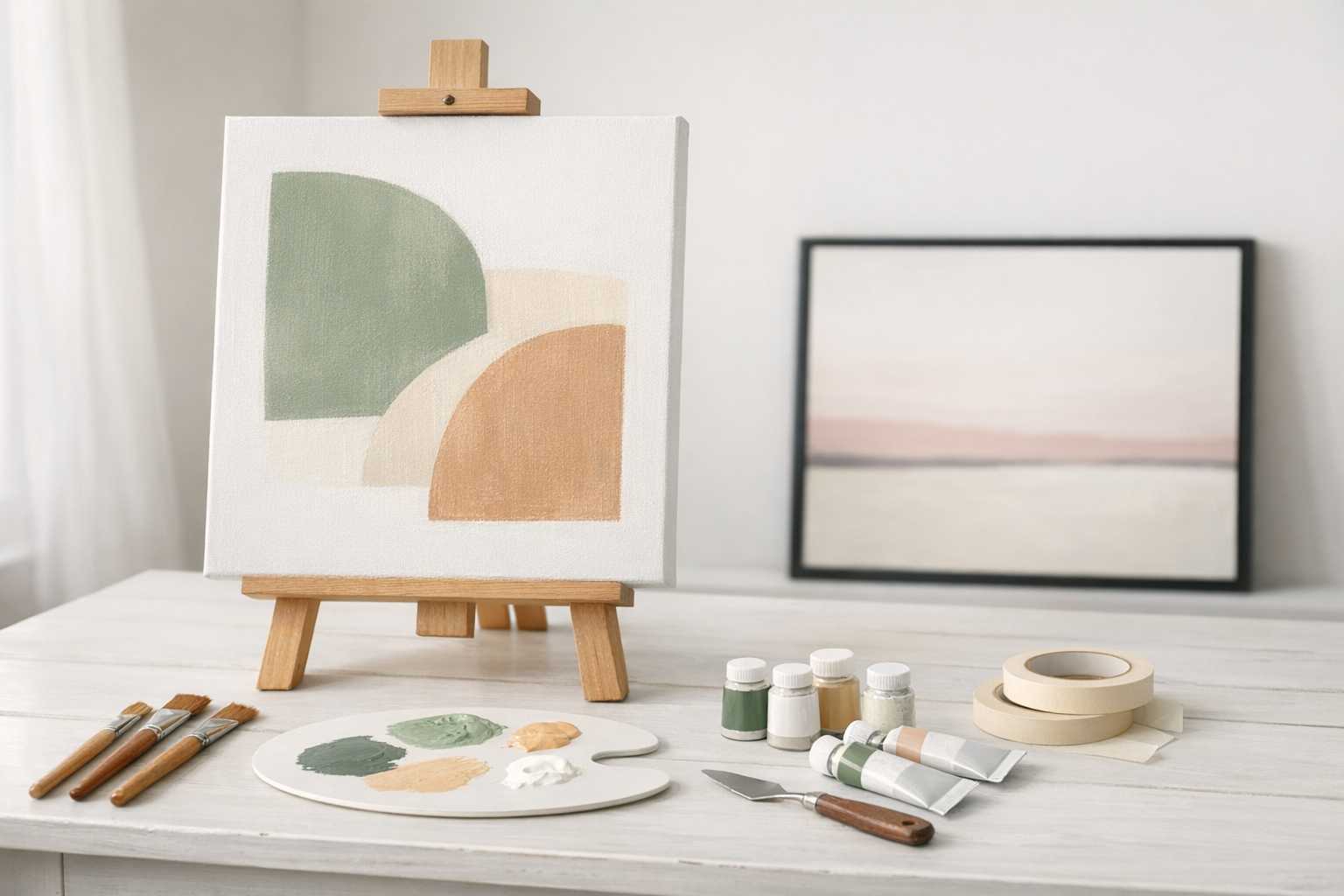
Basic Materials Required
To begin your minimalist painting journey, you don't need a ton of supplies. Here are the essentials:
- Canvas or equivalent board
- A range of acrylic paints (including white and black, plus an additional 2-3 colors)
- A collection of flat brushes in varying sizes
- Palette knife
- Masking tape
- Paper towels
That's all there is to it! As your confidence blossoms, you can incorporate more materials into your toolbox.
Easy Geometric Outline Paintings
Geometric shapes are a suitable choice for beginners. Initiate your painting with rudimentary structures like circles, squares, or triangles.
Try painting a single large circle in soft beige surrounded by a sea of white canvas. Alternatively, construct a trio of squares in varying shades of blue.
To attain neat, sharp boundaries, a tip is to use masking tape. For optimal results, remove the tape while the paint is still slightly damp.
These simplistic designs introduce an air of refined, contemporary sophistication.
Monochromatic Color Schemes
Sticking to one color family can simplify your palette. Select different hues of the same color.
Opt for various grays, from pale to dark. Alternatively, voyage into the realm of blues or greens.
Paint simple brushstrokes or blocks of color. The fundamental key is to maintain simplicity and neatness.
Monochrome paintings inevitably exude an aura of elegance and timeless beauty.
Line Art and Abstract Impressions
Sometimes, the simplest concepts are the most effective. Paint a few audacious lines across your canvas.
Using a flat brush, form thick, confidently-drawn strokes. Try black vertical lines set against a cream background.
You could also paint gentle curves in soft pastels. Remember not to over-analyze it - let your brush movements follow a natural rhythm.
These abstract line paintings can instantly enhance the sophistication of any room.
Horizon Line Landscapes
Construct fantastic landscapes using just a horizon line. Paint the lower half of your canvas in one color and the upper half in another.
Introduce a sandy beige for the bottom half with a pale blue sky for a beachy ambiance. Alternatively, experiment with a combination of soft pinks and creams for a dreamy sunset effect.
Employ masking tape to achieve a perfectly straight line, a trick to creating a chic, modern aesthetic.
Feel free to include elegant details like a sun or moon, but remember, less is often more.
Techniques Using Negative Space
Negative space refers to the untouched area surrounding the primary subject. In minimalist art, this space plays a role as significant as the painted areas.
Paint a small figure in one corner, leaving the remainder of the canvas blank. Alternatively, create a basic design that incorporates the white canvas into the composition.
This technique sets up visual balance and infuses your painting with tranquility and peace.
Color Blocking Strategies
Color blocking pertains to the practice of painting contiguous blocks of solid colors. Choose 2-3 complementary colors.
Experiment with gentle pastels such as blush pink, sage green, and cream. Paint each color in a simple rectangular frame.
Ensure each block is a different size to stimulate visual interest and keep the borders neat and sharp.
This technique consistently introduces a modern and refreshing ambiance.
Incorporating Texture Without Complexity
Even when maintaining simplicity, you can still introduce textures. Use a palette knife to generate subtle textures in your paint.
Explore gentle scraping movements or light patting. Avoid going overboard; aim for just enough texture to interact interestingly with light.
Concentrate the texture in one area of your painting while keeping the remainder smooth and uncomplicated.
Avoiding Common Beginner Mistakes
To avoid potential pitfalls, take heed of a few pointers:
Avoid overloading with colors. Remain loyal to your chosen palette.
Steer clear of generating multiple focal points. Stick with a single primary element.
Refrain from covering every inch of your canvas. Embrace the beauty of empty space.
Bypass intricate details. Stick with bold simplicity.
Remember, it's easier to add more later if needed, but retracting is more challenging.
Selecting Your Color Palette
Begin painting with colors you're already drawn to. Look to your home for inspiration.
Safe choices include neutral colors like beige, gray, and white. For more color excitement, introduce a single standout hue.
Earth tones beautifully complement minimalist paintings. Consider sage green, warm browns, and soft creams.
Before transferring your palette to the canvas, trial your color choices on paper.
Displaying Your Minimalist Paintings
Minimalist paintings look most impressive within simple frames. Opt for sleek, contemporary frames in white, black, or natural wood.
Allow your artwork ample wall space. Avoid overlapping with other decorative items.
Good lighting can make a world of difference. Natural lighting or simple spotlights work best.
Consider creating a series of similar paintings. A trio of small paintings displayed in a row creates a grand impression.
Building Confidence as You Paint
Start with smaller canvases. They're less daunting and consume less paint.
Don't chase after perfection. Embrace happy accidents - they often lead to beautiful discoveries.
Take a step back if you become frustrated. Fresh eyes often find solutions.
Share your masterpieces with friends and family. Their encouragement will bolster your confidence.
Advancing Your Painting Skills
Once you've mastered the basics, consider mixing colors directly on the canvas. This technique enables subtle color graduations.
Test different brush techniques. Try dry brushing or blending methods.
Learn from renowned minimalist artists like Mark Rothko or Agnes Martin. Observe how they manipulate color and empty space.
Regular practice - even if only for 20 minutes - is important for continual improvement.
Conclusions on Minimalist Painting
Minimalist painting involves unearthing beauty in simplicity. You don't need intricate skills or fancy supplies to create something breathtaking.
Let these basic ideas kickstart your creative journey. Each painting will unfold a new lesson.
Always remember, the objective isn't perfection. It's about expressing yourself while enjoying the process.
Your initial painting might not be gallery-worthy, but that's perfectly fine. Every artist was once a beginner.
So pick up your brushes and start creating. The realm of minimalist art is awaiting your exploration.