Simple Monochrome Minimalist Art: Essential Techniques Guide 2026
Demystifying Monochrome Minimalist Art: Essential Techniques for 2026
An Overview of Monochrome Minimalist Art
Monochrome minimalist art is an elegant aesthetic that uses one color or a particular color's varying shades. Its essence lies in simplicity and minimalism, focusing more on the key elements like shapes and forms and shedding unnecessary details.
The allure of this art form often lies in its exacting simplicity - it aims for emotion from omission, not accumulation. Minimalist art reiterates that less can indeed be more.
Why Monochrome Art is a Great Starting Point for Novices
Beginning with a single color eliminates artistic complexities such as color theory or coordination. It allows you to shift your concentration to the composition and form, accelerating your foundational skills’ development.
Monochrome art is also economical. It requires a minimal set of supplies, so it's easy to start with a simple array of pencils or just one color palate. Many renowned artists have started with monochrome sketches, testifying to the effectiveness of this approach in improving artistic abilities.
Necessary Tools for Monochrome Art
Keep your toolkit compact and efficient. You require:
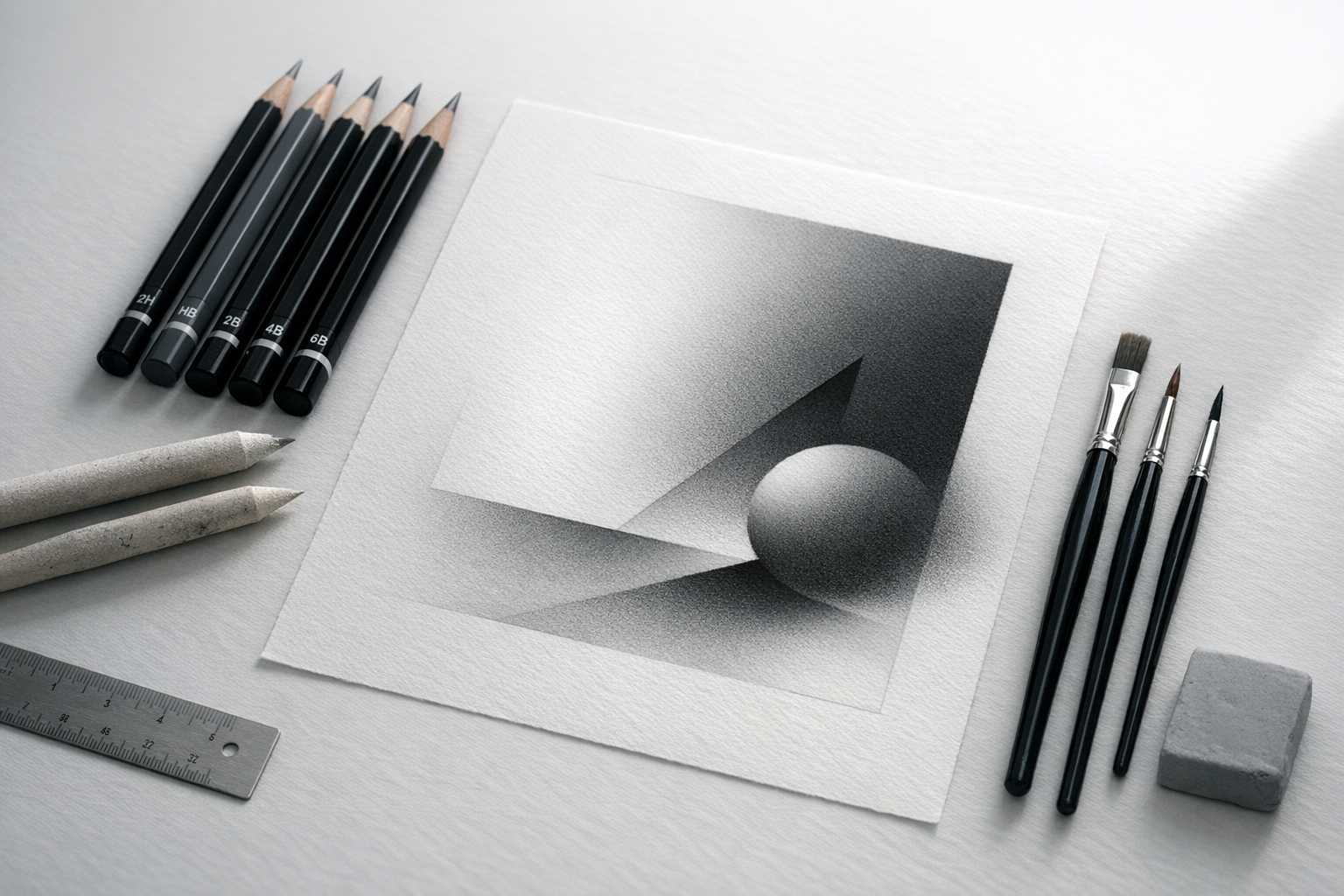
For Sketching: - High-quality graphite pencils of varying hardness (2H, HB, 2B, 4B) - Blending stumps - Soft erasers - Smooth drawing papers
For Painting: - Black and white acrylic or watercolor paints - Selection of fine brushes (flat and round) - Canvas or watercolor papers - Palette knife for mixing colors
Digital Tools: - iPad with Apple Pencil - Simple sketching apps, such as Procreate - Graphics tablet compatible with your computer
Fundamental Techniques for Spectacular Monochrome Art
Value and Contrast Mastery
The term ‘value’ represents the lightness or darkness of colors. In monochrome art, the value is paramount.
Practice with simple gradient exercises, ranging from stark white to deep black. This helps train your eye to spot subtle differences.
High contrast can create dramatic effects, whereas low contrast can bring in tranquility. Manipulate values to create varying moods in your art pieces.
Utilizing Negative Space
The empty area surrounding your subject is the negative space, which plays a crucial role in your artwork.
Effectively used, negative space allows your artwork to breathe and provides respite to the viewer's eyes. Practice focusing on the surroundings, not just the main object, for more captivating results.
Depth Creation without the Use of Colors
Use overlapped objects and shadows to create illusions of depth in your illustrations. Distant objects can be represented lighter and less detailed to mimic real-life vision.
Step-by-Step Procedure for Your Initial Art Piece
Composition Planning
Initiate with thumbnail sketches for a broader perspective of your ideas. Maintain simplicity with compositions and utilize the rule of thirds for pleasing arrangements. Consider your main focus points.
Layered Art Creation
Start with light marks and basic shapes. Work on overall values before adding particulars. Take steps back to view your work in progress from a distance periodically.
Adding Final Touches
Reserve your darkest shades and brightest lights for final touches. Minimal textures work best for minimalist art. Avoid over-complicating your work to retain the minimalistic feel.
Common Pitfalls to Shun
Avoid inclusion of every visible detail. Minimalism calls for ruthless reduction. Avoid monotone values and rushing through the process. Stop second-guessing your instincts.
Digital versus Traditional Methods
Traditional approaches provide a tactile experience, while digital tools offer easy corrections and unlimited retries without wasting materials.
Both methods can be equally rewarding. Try both to identify the approach that best suits you. Many artists prefer combining both for maximum benefits.
Discovering Your Personal Style in 2026
Study the works of pioneers like Giorgio Morandi and Agnes Martin. Experiment with varying subjects and keep a repository of inspiring works. Develop your own style instead of mimicking others.
Establishing a Portfolio and Showcasing Your Work
Document your evolution with properly illuminated photographs. Share your work on social media platforms using appropriate hashtags. Interact with online art communities for constructive feedback.
Continued Learning and Growth Tips
Maintain regular practice and challenge yourself with unique subjects. Take occasional breaks to study other artists. Patience and consistency are key to improvement.
Conclusion: Your Foray into Minimalist Art
Monochrome minimalist art is an excellent gateway to the world of art. Focus on simplicity and strong composition, mastering value and contrast before venturing into complex subjects.
Embrace this tutorial and make the techniques your own. Your minimalist masterpiece is just around the corner, ready to take form.
SEO Information:
SEO Slug: monochrome-minimalist-art-techniques-guide
Focus Keyphrase: techniques for monochrome minimalist art
Meta Description: Get to grips with monochrome minimalist art with our comprehensive 2026 guide. Discover essential techniques, materials, and stepwise methods for creating striking single-color masterpieces.