Botanical Art Techniques: Detailed Flower Drawing Guide 2026
The Wonderful World of Botanical Art: Your Guide to Mastering Flower Drawing in 2026
There has never been a more gratifying moment than now to engage in drawing flowers. No matter your skill level, whether an absolute novice or an artist in search of perfection, botanical artistry offers ceaseless opportunities for creative expression. This extensive guide provides a comprehensive introduction to creating magnificent flower illustrations in 2026.
The Significance of Botanical Art
Botanical art engages the intersection between science and artistry. Uniquely different to ordinary floral drawings, botanical illustrations demand precision and meticulous attention to each component of the subject. Every detail of the petal, leaf, and stem is diligently studied and accounted for.
This genre, profoundly influential for centuries, has been used by both scientists and artists as a means of documenting plant species. Recognized today as both a captivating instrument for education and an artistic media, botanical art is thriving.
Essential Instruments for Flower Illustration
Traditional Drawing Tools
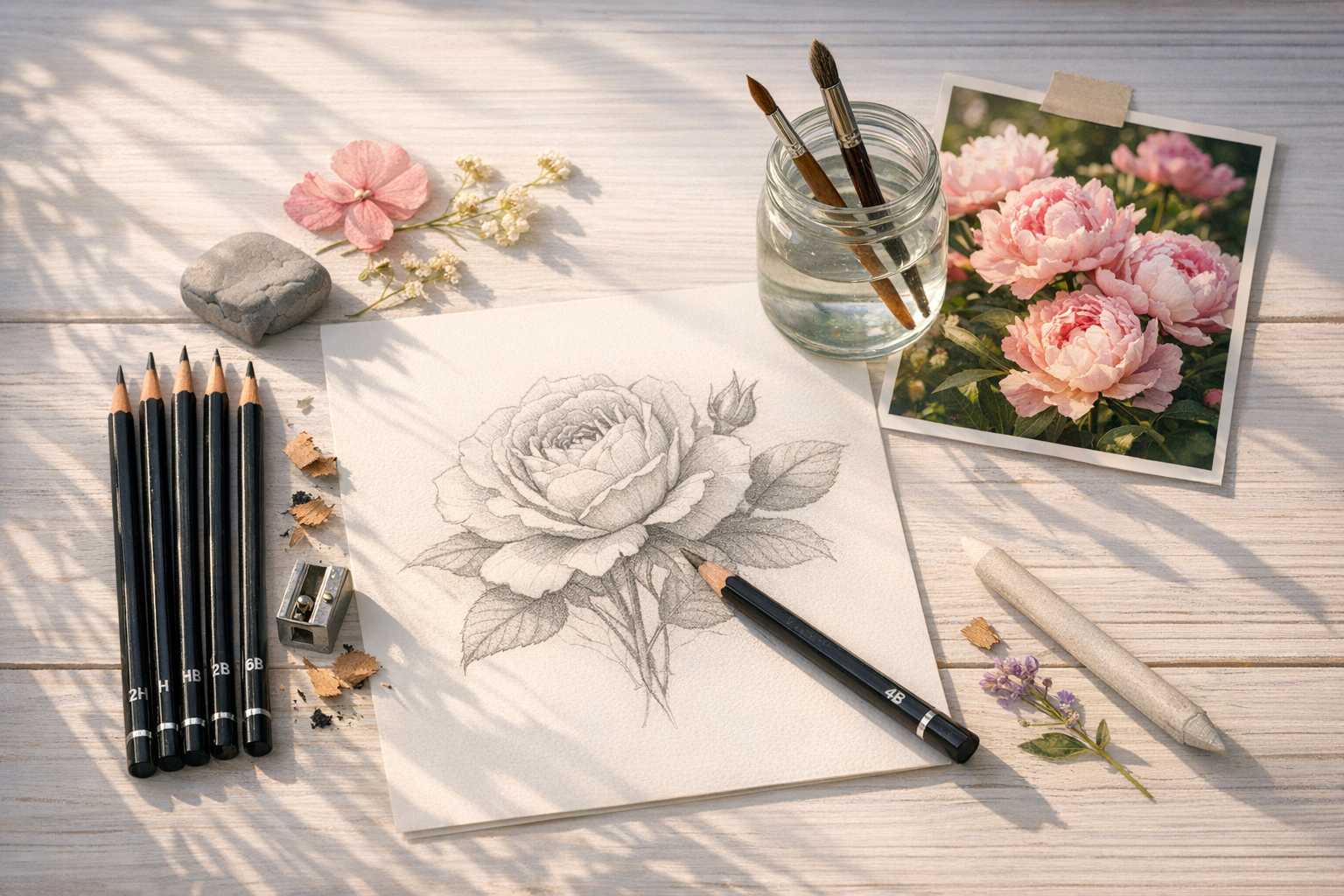
Begin with high-quality pencils. H pencils are perfect for faint outlines, while B pencils help achieve intensely darker and richer shades. A set of pencils from 2H to 6B would provide versatility.
The importance of selecting the right paper cannot be overstated. Choose a smooth, heavy-duty paper capable of accommodating numerous layers of application. Bristol board and hot-pressed watercolor paper are exemplary choices.
Don't overlook the importance of a good eraser. A kneaded eraser is ideal for gentle modifications, whereas a white vinyl eraser is perfect for tackling more stubborn markings without damaging the paper.
Modern Digital Instruments
Digital botanical art has been rapidly gaining momentum. Tablets such as the iPad Pro, used in conjunction with the Apple Pencil, provide incredible precision. Wacom tablets are also favored by professional artists.
Software like Procreate, Adobe Illustrator, and Photoshop each offer unique features for botanical illustration. Procreate is sought after for its natural brush textures, while Illustrator is noted for its perfect vector lines.
Recognizing the Structure of a Flower
Crucial Botanical Parts
It's critical to understand even the most basic parts of a flower. Petals, forming the vibrant outer ring; sepals, whose role includes protecting the flower bud, along with the stamen and pistil, which play a significant role in reproduction.
Before drawing, carefully study your chosen flower subject. Look at how the petals overlap and the manner in which leaves attach themselves to the stem. These finer details are integral in achieving scientific accuracy within your artwork.
Identifying Patterns of Light and Shadow
Light uncovers the form of botanical subjects. Notice how the shadow casts in-between petals, how highlights touch upon the glossy leaves.
Before tackling a complex flower, practice sketching out simple geometric shapes. Spheres, cylinders, and cones are easily found throughout nature. Perfect these basics first.
The Process of Drawing: A Step-by-Step Guide
The Early Sketching Phase
Begin with faint, fluid strokes. Establish the outline of the flower before progressing to detailing. The H range of pencils will work best for this phase.
Measure proportions diligently. Gauge the width of the petal against the flower’s center. See how the stem measures up to the size of the bloom.
Perfection in the early stages is not crucial. Concentrate on accurately capturing the primary gesture and proportions. There will be many opportunities for refining the finer details.
Progressing to Details
Start broadly, then work your way to the specifics. Add the significant shapes first, followed by smaller details. This method takes away the risk of getting lost in less important elements.
Ensure you give attention to overlapping shapes. Show how one petal can sit in front of another; this contribute towards depth and dimension in your work.
Whenever possible, use reference photos alongside the live flower. Photos can immortalize moments that fresh flowers cannot maintain over time. But true colors and textures can be best seen and represented through live flowers.
Techniques for Final Refinements
The final touches separate a good drawing from an exceptional one. Consider implementing subtle textures on petals and leaves, or perhaps illustrating the delicate veining patterns.
Adjust your contrast range. Ensure the darkest shadows and lightest highlights are in their appropriate place. This creates a strong visual impact.
Take regular pauses to reassess your work. Fresh eyes will catch any issues that may have been missed when focussing on close-up details.
The Application of Color Theory in Botanical Art
Understanding Natural, Floral Color Palettes
Flowers offer incredible complexity in their color palettes. A simple rose, though red, can contain dozens of varied shades. It’s important to learn to perceive these subtle differences.
The temperature of color in nature should also be considered. Even within a single petal, there will be warm and cool variations. It’s common to find cooler tones cast within shadows and warmer tones in areas hit by light.
Practice color mixing with traditional media. Even for digital artists, understanding how pigments interact with each other can significantly enhance color selection.
Techniques for Digital Colors
Digital tools provide unique advantages for handling colors. You can try multiple combinations without the risk of wasting expensive traditional pigments. The ability to add multiple layers facilitates easy adjustments and corrections.
Color selector tools are beneficial for achieving accurate colors from the references. However, they should be used sparingly and not exclusively relied upon. Make an effort to train your eyes to perceive the relationships between colors.
The use of adjustable layers can provide extraordinary flexibility. This feature eliminates the need to start from scratch, significantly accelerating the process of refinement.
Advanced Techniques for Botanical Art
Techniques to Render Texture
Different flowers will necessitate different approaches due to their texture. The petals of a rose, for example, are velvety and soft, while lilies might appear waxy and reflective.
Take time to study the texture patterns in nature. Understand how the light interacts with different surfaces. A smooth texture will reflect light sharply, while rough textures will softly scatter light.
Try creating textures with different stroke patterns. Short, broken strokes suggest roughness, while long, smooth strokes suggest a sleek surface.
Composition and Layout
Effective botanical art requires careful composition. Be conscious of how the flower occupies your space on the canvas. Allow for comfortable breathing room around your subject.
Consider the visual flow and movement within your composition. Guide viewer’s attention through your piece. Occasionally, a strong focus point is essential to hold the design together.
Gain inspiration from master botanical artists. Creations by Maria Sibylla Merian and Georg Dionysius Ehret, to name a few, still inspire artists today.
Common Mistakes to Avoid
Issues with Proportions and Scale
Mistakes with proportion and scale are a common struggle for beginners. Make considerable effort to measure correctly, and check your work regularly. Comparing with the original subject will help with accuracy.
Be wary of making all elements the same size. Variations in size create more realistic artworks, such as having some petals larger than others.
Properly scale the different parts of your plant. The stem should support the size of the flowers and leaves should be proportionate to the size of the flower.
Overworking Your Illustrations
Always know when to stop working on your piece. Overworked drawings lose their freshness and vitality. Sometimes, less detail can have more impact.
Preserve some simple areas. It’s not necessary to add intricate detail to every section. Selectively focusing on certain areas will draw attention more effectively.
Rest during lengthy drawing sessions. A fresh perspective will help identify any issues and allow an understanding of when the piece is finished.
Building a Botanical Art Portfolio
Choosing Your Subjects Wisely
Before progressing on to complex species, begin with simpler flowers. Daisies and tulips make for great learning opportunities. Save intricate flowers like roses and peonies for later.
Create a diverse portfolio by including an assortment of flower types, sizes, and growth stages. Present different stages of a flower's lifecycle, from buds, mature blossoms to seed pods.
Throughout each season, document local flora to steadily improve your skill while creating a cohesive body of work.
The Uses of Reference Photography
Good quality reference photos are the ingredients behind extraordinary pieces of art. Acquaint yourself with the basic principles of photography in order to capture useful, practical material for reference.
Whenever possible, capture your subject from multiple angles. Different viewpoints can reveal several aspects of your subject, while close-ups can provide clear detail of texture.
Don’t forget to consider lighting when photographing your subject. Soft, diffused light usually works best for botanical subjects as it doesn’t cast harsh shadows that might hide crucial details.
Traditional Methods vs Digital Methods
Benefits of Traditional Mediums
With traditional materials, the tactile experience is unmatched. The sensation of graphite stroking across paper cannot be replicated digitally, and is often the inspiring connection between many artists and their work.
Traditional skills easily translate to digital mediums. Understanding the fundamentals of drawing is beneficial regardless of the mediums used.
More than their digital counterparts, original artworks hold sentimental and sometimes monetary value. Physical pieces can be displayed, sold, or given away as gifts.
Advantages of Digital Methods
One of the greatest advantages of digital mediums is its flexibility. Mistakes become opportunities to learn and experiment, not disasters. The ability to undo endlessly promotes experimentation.
Digital files are easy to store and occupy no physical space. Thousands of art pieces can be stored without stacks of cabinets and portfolios.
Sharing digital art is as quick and easy as the click of a button. Social media and online galleries make it easy to reach out to the global community of botanical artists.
Cultivating a Personal Style
Drawing Inspiration from Nature
Spend quality time in observing flora in their natural habitats. Gardens, parks and wild spaces offer ample opportunities for inspiration.
Maintain a field study sketchbook. Sketching quickly can capture details that photos can miss. These sketches can sometimes fuel ideas for larger projects.
Study current botanical artists. Social media platforms display a multitude of talented artists with different styles from all around the world. Learn from their techniques and approaches.
Experimenting with Different Techniques
Explore different techniques of botanical artistry to identify your preferences. Some artists may prefer photorealistic accuracy, while others may lean towards more artistic interpretations.
Incorporate different media in a single piece. Perhaps you’d like to combine pencil with watercolor, or try ink with colored pencil. Unique combinations can create exciting effects.
Don’t hesitate in breaking traditional rules from time to time. This can lead to innovative art forms.
The Future Landscape of Botanical Art
Integrating Technology
Artificial intelligence tools have begun to influence botanical art. While they can aid in gathering resources and making preliminary sketches, the human eye for observation and interpretation remains unmatched.
Augmented reality applications can effectively help artists investigate plant structures from unique angles. 3D models, which provide viewing angles impossible with static references, can revolutionize how we study and draw plants.
Virtual reality can potentially allow artists to virtually walk through a botanical environment, resulting in immersive experiences that could be truly revolutionary.
Increasing Interest within the Community
The global community for botanical art continues to grow. Learning has become accessible to a global audience, with online workshops. More and more botanical gardens have also started offering drawing classes.
Interest in environmental awareness drives interest in documenting plants. Artists contribute significantly to the conservation efforts through precise botanical illustrations.
Social media platforms have made it possible for botanical artists to connect and share techniques with each other. Instagram and Pinterest, to name a few, offer a platform to millions of potential viewers to explore their work.
Wrapping Up
Climbing up the ladder to mastering botanical art techniques demands consistent time and practice. Start simple with basic drawing skills and gradually incorporate complexity. Focused observation reigns above all else.
Remember that every professional, too, was once a beginner. Patience, therefore is key in the journey of developing and refining these skills. Each drawing is an opportunity to learn something new, about art or nature itself.
The harmony of scientific accuracy and artistic beauty create an extraordinary charm within botanical art. Regardless of your preferential mediums, whether traditional or digital, the core principles are universal.
Regular practice and real-life studies will contribute considerably towards the steady improvement of your botanical art skills. With consistent effort and precision in your attention to details, the world of botanical art is yours to explore.