Portrait Value Study: Mastering Light and Shadow
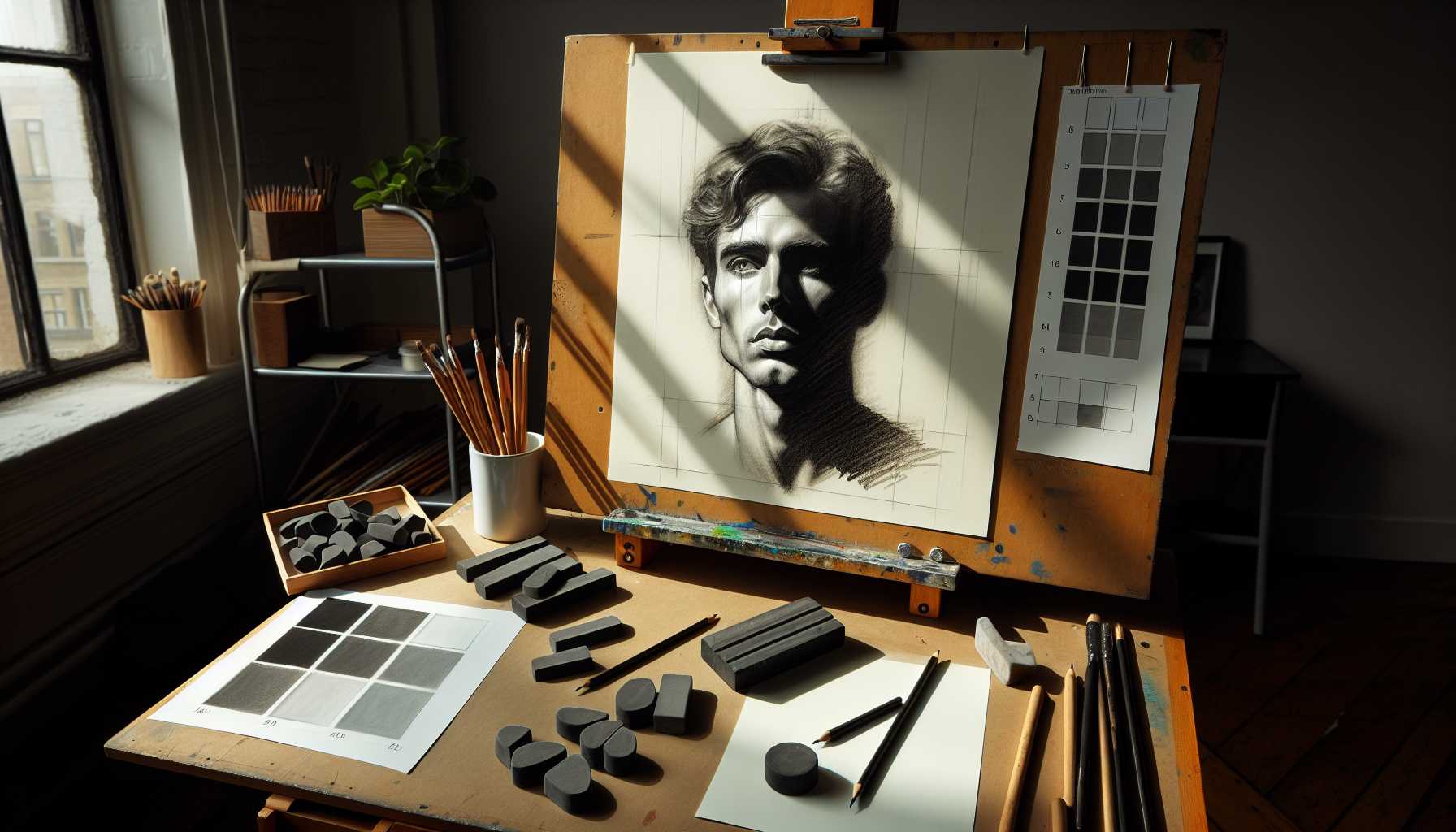
Mastering the Art of Portrait Value Studies: An Exploration of Light and Shadow
Creating an impactful portrait extends beyond merely capturing someone's likeness. It requires a true understanding of light's interaction with faces, and how shadows help to delineate character.
Value studies serve as the bedrock of every exceptional portrait. They train us to look past color and concentrate on the component that truly counts: the interplay between light and darkness.
The Importance of Value Studies in Portrait Creation
Value studies act as a simplifier, sharpening your focus on the crucial aspects that breathe life into portraits.
Consider value as the backbone of your artwork. Without well-defined values, even the most vivid portrait appears lackluster.
It’s not unusual for beginners to dive immediately into working with color. As a result, their work often becomes muddled or unclear. The practice of value studies counteracts this common pitfall.
Accomplished artists are unwavering advocates of this methodology, understanding that a mastery of values yields more striking portraits.
The Fundamentals of Light and Shadow
Light behaves in a consistent, predictable manner on three-dimensional forms. By mastering these patterns, the task of portrait painting becomes much simpler.
All faces share similar lighting patterns. Success lies in recognizing and accurately reproducing these patterns.
Five Crucial Elements of Form
Five fundamental elements underpin the work of portrait artists:
- Highlight: The brightest point directly hit by light
- Light tone: Areas bathed in direct light
- Halftone: Serves as the bridge between light and shadow
- Shadow: Portions obscured from direct light
- Reflected light: A delicate glow reflecting back into the shadows
These formative elements are present within every portrait, regardless of the subject portrayed.
Structuring Your Portrait Value Study
Begin with simple lighting arrangements. A single light source generates the most uncomplicated shadow patterns.
Arrange your light source at a 45-degree angle from your subject. This angle results in striking, dramatic shadows free from harshness.
When getting started, it’s best to avoid multiple light sources. They generate discordant, intricate shadows, which are challenging to decipher.
As a beginner, you'll find natural window light a great ally; It's gentle, directional, and, best of all, cost-free.
A Stepwise Approach to Value Study
Step 1: Define Your Value Scale
Develop a straightforward five-tone value scale. Ranging from 1 (darkest) to 5 (lightest).
This finite palette compels you to consciously decide the relative darkness of every area.
Strive to mix these values consistently, as consistency is the backbone of successful value studies.
Step 2: Outline Main Shapes
Gaze softly at your subject. This technique enables you to get an overall sense of the image, without getting lost in the tiny details.
Firstly, identify the largest light and shadow shapes. These main structures serve as your groundwork.
Ignore intricate details at this initial stage. Concentrate purely on main value relationships.
Step 3: Hone the Halftones
Halftones are where the magic truly takes place. They cast the illusion of a three-dimensional figure.
Pay particular attention to how halftones merge into shadows. The way these transitions occur shape the form's curvature.
Subtle variations in halftone set apart good portraits from truly sensational ones.
Step 4: Apply Final Details
Once you have solid value relationships in place, proceed to add details. Any details without strong values will lack credibility.
Prioritize areas with a stark contrast. These attract the viewer's attention naturally.
Remember, in portrait studies, less is more often the golden rule.
Common Pitfalls to Avoid
Artists often depict their shadows as too light. Shadows need to be visibly darker than halftones.
Don't compromise your darkest darks. They provide essential contrast and depth to your portraits.
Avoid over-rendering reflected light within shadows. It should be unobtrusive, never competing with direct light.
Resist the temptation to rush into adding details. Powerful values are of greater significance than immaculate features.
Improving Your Portrait Value Study Through Practice
Begin with uncomplicated subjects. Friend or family members can make for cooperative models.
Allocate some time for practice daily, even if it's as little as 15-20 minutes. Regularity trumps lengthy sesssions.
Examine master paintings and scrutinize their value patterns. Observe how they employ contrast to create points of focus.
Photograph your subjects under varying lighting conditions. This helps you grasp how light impacts form.
Digital vs. Traditional Value Studies
Both methodologies have their own advantages. Opt for the one that suits you best.
Digital tools provide endless opportunities for corrections and simplifies value adjustments. Traditional media, on the other hand, enhances color blending and fosters brush control.
Many artists employ both methods, utilizing digital for rapid studies, and traditional for finished works.
Regardless of your chosen medium, the underlying principles remain unchanged.
Progressing With Value Study Techniques
Utilizing Temperature Shifts
Inclusion of warm and cool temperatures can add richness to your value studies. Typically, warm lights generate cooler shadows.
These temperature considerations yield visual appeal without compromising your value structure.
Generating Atmospheric Perspective
Objects that are nearer exhibit stronger contrast. Far-off elements appear lighter and less precise.
This tenet applies even to close-up portraits. The planes that recede become perceptibly lighter.
Adjusting Edges
Edgework is a critical aspect of a portrait. Edges that are sharp advance forward, while soft edges recede.
Mysterious and interesting effects are created when edges are lost, preventing over-detailed works. Not every edge needs to be defined.
Boosting Your Portrait Value Study Competence
Every day, study faces under various lighting conditions. Note how shifting light modifies the same features.
Maintain a sketchbook solely dedicated to swift value studies. Fill its pages with sketches that capture the essence of values.
Participate in virtual communities of portrait art enthusiasts. Exchanging your works and feedback can fast-track your learning curve.
Consider enrolling in life drawing classes. The experience of drawing live models significantly refines your skills of observation.
Moving Forward
Becoming proficient in portrait value studies calls for patience and ongoing practice. Don't chase perfection from the get-go.
Strive for growth over perfection. Every study unfolds valuable insights on light and form.
Don't lose track of your original motivation. The exhilaration that comes from portraying human character via the interplay of light and shadow is deeply enriching.
Persist with your studies, maintain the rhythm of your practice, and more than anything else, relish the journey.
With every completed value study, your portrait skills will gradually hone. Remember, master painters did not accomplish greatness in a single day, nor will you.
But with unfaltering commitment and consistent practice, you will amass the skills necessary to create compelling portraits that genuinely capture the spirit of your subject.
Embark on your next portrait value study today. Your future artistic self will certainly appreciate you for taking this significant stride.