Simple Pattern Painting: Easy Repetitive Design Guide
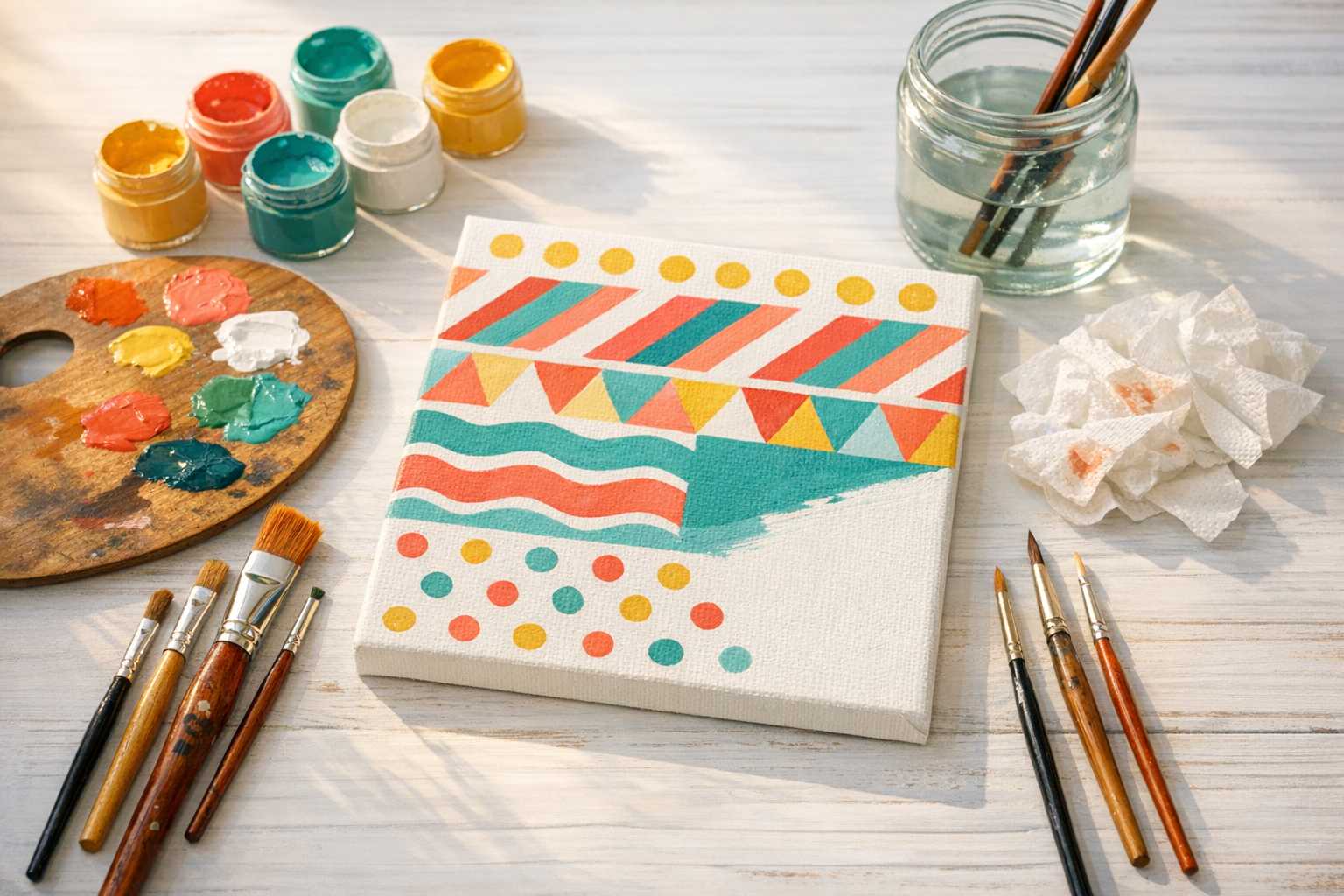
Beginner's Guide to Easy Pattern Painting
If you've always dreamed of creating art but felt overwhelmed by intricate techniques, then simple pattern painting could be your ideal starting point. This enchanting art form revolves around repetitive designs that are achievable for anyone, no matter their skill level.
Pattern painting is akin to a meditative journey navigated with a paintbrush. You'll find yourself absorbed in the rhythmic brushstrokes, and the beauty of it all is that perfection isn't a requirement.
Unveiling the Charm of Pattern Painting
Pattern painting stands out for its simplicity and recurring designs. Unlike realistic painting, it doesn’t demand precise proportions or complex shading. The goal is to craft pleasing rhythms using shapes and colors instead.
Many beginners find this approach particularly appealing, as perceived mistakes often evolve into unexpected surprises. An imperfect line may add character to your design, whilst an unplanned splash of color could result in a visually delightful section.
The therapeutic benefits of pattern painting are undeniable, as reported by numerous artists who claim to feel calmer post-session. It's like a refreshing workout for your creative mind.
Must-Have Tools for Beginners
It's not necessary to splurge on pricey art supplies for starting your journey in pattern painting. Here's a list of recommended essentials for beginners:
Fundamental Brushes: Begin with a 1/2 inch and 1-inch flat brush, alongside a few small, detailed brushes for precision work.
Acrylic Paints: Opt for 6 - 8 base colors that you can subsequently combine to create a countless array of shades.
Canvas or Paper: Canvas boards are an excellent choice for beginners, being budget-friendly whilst offering an optimal painting surface.
Palette Knife: This tool will aid in mixing your colors and can be utilized for painting textured patterns.
Water Containers: Maintain two separate jars - one for washing brushes, the other for fresh water.
Additionally, don't neglect the necessity for paper towels and a palette for mixing your colors. An old plate will serve as an efficient, cost-effective palette.
Straightforward Patterns to Begin With
Let's delve into some beginner-level patterns that are visually compelling yet simple to execute.
Dots and Circles
Dotting patterns are profoundly forgiving and gratifying to execute. Start by painting substantial circles in a single color, leaving them to dry fully.
Incorporate smaller circles within the larger ones using a contrasting color, gradually adding even smaller dots. This will create a unique layered effect.
Try randomizing the sizes of your dots. This spontaneous method often results in a pattern more appealing than fixed, uniform patterns.
Stripes and Lines
Stripes are a great beginner-friendly pattern. Use painter's tape if you aim for precision or paint freehand for something more casual.
Experiment with varying widths of stripes. The juxtaposition of thick and thin lines creates visual rhythm. Experiment with alternating colors or transitioning from one shade to another slowly.
Incorporating wavy stripes imparts movement to your artwork. Stripes need not be perfectly parallel; slight diversions add character.
Geometric Shapes
Basic geometric patterns can seamlessly transform into something remarkably sophisticated. Start with rows of triangles, squares, or diamonds.
Overlap your shapes to create fascinating intersections and use divergent colors at the points where the shapes intersect. This technique adds a depth of field without adding unnecessary complexity.
Gradually scaling your shapes from large to small across the canvas fabricates a sense of movement and flow.
Simplified Color Theory
Understanding the fundamental relationships between colors will significantly augment the aesthetic appeal of your pattern paintings.
Complementary Colors are directly opposite each other on the color wheel, such as red and green, or blue and orange. These combinations create vivid, attractive patterns.
Analogous colors are adjacent on the color wheel. A palette of blue, blue-green, and green together creates patterns that evoke peacefulness and harmony.
Monochromatic Schemes utilize different shades of a single color, rendering the artwork sophisticated and cohesive. Experiment with mono-colored schemes, such as different shades of blue or a variety of greens.
Do remember to incorporate neutral colors in your artwork. White, black, and gray can make your principal colors stand out and provide visual relief.
Process of Pattern Creation: Step-by-Step
The following trusted process will assist you in creating successful pattern paintings:
Step 1: Set up your base. Choose a background color and coat your entire canvas with it. Let it completely dry for a coherent base.
Step 2: Establish your rhythm. Roughly sketch the placement of your primary pattern elements using a pencil or light paint to be covered later.
Step 3: Begin with large elements. Start with the most significant shapes or most profound colors to lay your pattern's foundation.
Step 4: Incorporate medium elements. Fill the gaps with the next size or the most vital pattern elements. Frequently step back to evaluate your progress.
Step 5: Final touches - details. Add small embellishments, dots, lines, or textures. These subtle nuances will enhance the overall visual appeal.
Step 6: Assess and make amendments as needed. Check if any area looks too crowded or too sparse. Often minute inclusions or adjustments can perfect your artwork.
Avoidable Beginner Mistakes
All artists make mistakes at the learning stage. Here are common missteps when painting patterns and how to prevent them:
Rushed drying process can result in blurry colors and smudged lines. Patience between layers plays a vital role. Use a hairdryer if you’re eager to proceed.
Overly uniform patterns may appear rigid and robotic. Introduce slight variations in size, intervals, or color intensity.
Excessive colors leads to visual disarray. Start with a limit of 3-4 colors and gradually progress to more intricate combinations.
Overlooking negative space makes artwork seem compact. Realize that vacant spaces carry equal importance as the filled ones.
Comparison with others' work can be a creativity and confidence disrupter. Concentrate on your growth and the joy it brings.
Advanced Techniques to Explore
Once you've grasped the basic patterns, trying these techniques may add sophistication:
Layering translucent colors creates depth and richness. Blend your paint with a little fluid or medium for this outcome.
Texturizing techniques with sponges, combs, or palette knives add interest. Practice on spare paper first.
Gradient backgrounds where one color transitions into another creates a dynamic base for your patterns.
Mixed media elements such as pieces of collage or stamps can be coupled with your patterns. Try including fabric, paper, or objects you find.
Cultivating Your Individual Style
Pattern painting's singular charm lies in the revelation of your unique style. Some artists lean towards bold, geometric designs while others lean towards flowing, organically inclined patterns.
Draw inspiration from patterns in your routine life - architecture, textiles, nature, technology all offer rich sources of inspiration. Keep a sketchbook handy for recording ideas.
Ponder over your preference for color schemes - are intense, vibrant palettes your choice, or do you connect more with soft, muted tones?
Conclusion
Simple pattern painting is a welcoming portal into the realm of art. It does not require capitally intensive supplies or years of training. All you need is a brush and a yearning to explore.
Remember, even the most seasoned artists were novices once. Your initial attempts may not mirror your envisioned outcome, but that is an integral part of learning.
Above all, enjoy the experience. Let go of any perfectionist tendencies and embrace the calming quality of repetitive strokes.
Commence with accessible patterns like dots, lines, and shapes. Nurture your confidence with these basics before adventuring into more complex patterns. The key is regular practice - even 15 minutes can improve your skills significantly.
Your distinctive artistic style will naturally emerge through these straightforward, repetitive designs. So, get started and discover what patterns you end up creating today.