Simple Silhouette Painting: Beginner's Guide to Shadow Art
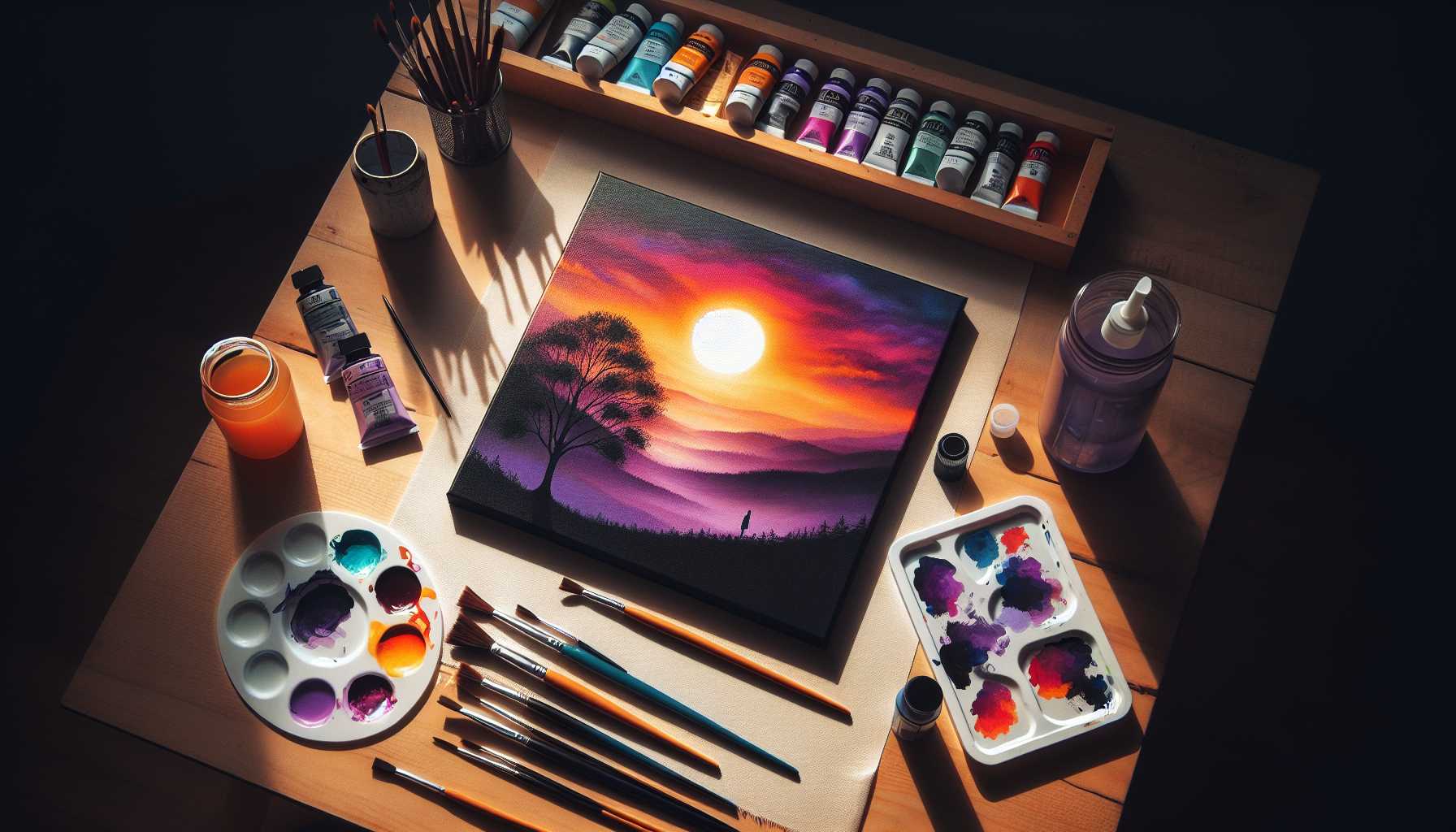
Beginner's Guide to Silhouette Painting: Embracing the Art of Shadows
Have you ever lost yourself in the mesmerizing sight of sunsets? There are the dark outlines majestically contrasting with the vibrant skies. That's the enchantment of silhouettes! And guess what? You can recreate that beauty through simple silhouette painting techniques.
There's no need to fret if you're a novice. Silhouette painting is among the most beginner-friendly art techniques. Let's explore the fascinating world of shadow art.
Understanding Silhouette Painting
Silhouette painting is about manifesting dramatic contrasts. This art involves painting dark figures against lighter backgrounds, creating a charming interplay of shadows and light.
It revels in simplicity, meaning you don't need to fret over intricate details or elaborate shading. Just focus on shapes and contrast.
This artistic form dates back centuries, with artists perpetually attracted to the potent interplay of shadows and light.
Why Initiate with Silhouette Painting?
Here's why silhouette painting is an ideal technique to start with:
- Forgiving nature. Even if you make minor errors, it won't ruin your painting.
- Basic materials. Only a few fundamental supplies are needed.
- Impressive outcomes. Your initial attempts might also look remarkable.
- Boosts confidence. Quick success is achievable with this technique.
I still remember painting my first silhouette. Initially, I was anxious about achieving perfection. But soon, I understood the liberating feeling when focusing on straightforward shapes.
Essential Art Supplies for Beginners
Starting your painting journey doesn’t have to be pricey. You’ll just need:
Foundational Painting Materials
- Acrylic paints (black, white, and a few fundamental colors)
- Canvas or watercolor paper (any dimension will work)
- Brushes (flat and round brushes of different scales)
- Water containers (you can use a couple of jars)
- Paper towels or fabric rags
Additional Suggestions
- Masking tape to create seamless edges
- Pencil for gentle sketching
- Palette or paper plate to combine colors
Plenty of art stores sell beginners’ kits, which are ideal to get started without excessive expenditure.
Choosing Your Inaugural Subject
Begin with something modest. Here are some novice-friendly subjects:
Simple Subjects for Beginners
- Trees juxtaposing colorful heavens
- City skylines incarnated by sunsets
- Animals in side view
- People posing or seated
- Mountains and beautiful scenes
Opt for something captivating. Your passion for the chosen subject will shine through in your artwork.
Guided Painting Procedure
Let's guide you through crafting your inaugural silhouette painting.
Step 1: Determine Your Configuration
Decide the position of elements. Keep it uncomplicated for the first attempt.
Utilize a pencil for soft outlining if desirable. Ignore details. Simply define the key patterns.
Step 2: Start with the Background
This is where the magic unfolds. Choose your background shades thoughtfully.
For sunsets: Commence with yellow or orange hues near the horizon. Transition into red, which then transforms into purple or blue upwards.
For simpler skies: Incorporate gradual color variations. Light shades are the best.
Work rapidly while the paint is still moist. It aids in seamless blending of colors.
Step 3: Allow the Background to Dry
Patience is essential here. Wet paint will contaminate your silhouettes.
Seize this opportunity for a quick interval. Check your inbox or simply relax. Return to it when it's wholly dry.
Step 4: Introduce Your Silhouettes
Now for the most exciting part! Implement black paint or intensely dark shades.
Paint your patterns as homogeneous color blocks. Inner specifics are unnecessary.
Initiate with broader patterns and end with minor particulars.
Step 5: Adjustments and Final Embellishments
Take a step back to review your work. Does a component need correction?
You can accessorize with tiny elements like birds or stars if desired. Though remember, ultimate simplicity often works best.
Successful Color Combinations
Certain color combinations are fail-proof:
Trustworthy Mixtures
- Orange and purple for theatrical sunsets
- Blue and yellow for serene morning views
- Pink and blue for delicate, dreamlike impressions
- Red and black for audacious contrast
Stay open to experimentation. Some of my most cherished paintings originated from unanticipated color pairings.
Familiar Mistakes by Beginners
Everyone errs. Here are the most frequent ones I've noted:
Mistake 1: Excessive Detail
Preserve the simplicity of silhouettes. Resist adding comprehensive branches or building features.
Mistake 2: Insufficient Contrast
Ensure your darks are truly dark and your lights genuinely light. Lackluster contrast results in dull paintings.
Mistake 3: Hastening the Background
Invest adequate time in your sky. It sets the ambiance for the entire scene.
Mistake 4: Painting on Damp Backgrounds
Always allow the backgrounds to dry thoroughly. Believe me, this tip is a lifesaver!
Handy Techniques for Enhanced Outcomes
Here are some tricks to enhance your painting skills:
The Wet-on-Wet Method
For a soft sky gradient, start working while the paint is still damp. This ensures a beautiful blend of colors.
Using Tape for Perfect Lines
Masking tape can help curate flawless horizons. Just remember to remove it while the paint is somewhat wet.
Layering Approach
Begin with lighter shades. Introduce darker colors afterwards. This cultivates depth and richness.
The Sponge Tactic
Ordinary sponges create exquisite cloud textures. Gentleness while dabbing yields the best results.
Practice Assignments for Beginners
Keen to practice? Sample these simple projects:
Project 1: Lone Tree Silhouette
Paint a gradient sky. Incorporate a lone tree shape. Maintain it ambitious yet simple.
Project 2: Urban Skyline
Produce a vibrant sunset backdrop. Integrate building designs along the base.
Project 3: Mountain Scenery
Paint sky hues from light to dark. Combine mountain patterns in layers.
Project 4: Animal Silhouette
Select an animal with a striking shape. Cats, elephants, and birds do great.
Each assignment will teach diverse skills. Take your time to learn from them.
Progressing Your Skills Over Time
Improvement comes with persistent practice. Here's how to maintain the growth:
Everyday Practice Recommendations
- Paint daily for 15 minutes. Regularity trumps long, infrequent sessions.
- Experiment with a new technique each week. Incremental improvements compile.
- Observe real silhouettes. Pay attention to shapes during sunrise and sunset.
- Join digital art forums. Share your work and receive constructive feedback.
Setting Attainable Goals
Don't expect flawlessness immediately. Set modest, achievable objectives.
Week 1: Finish an elementary silhouette. Week 2: Experiment with a pair of different color pairings. Week 3: Try various subjects.
Celebrate these trivial wins. They’re actually more significant than what you might expect.
Common Problem Solving Tackles
Facing a hiccup? Here are some solutions to usual issues:
Problem: Colors Appear Murky
Solution: Minimize the color palette. Ensure brushes are clean during a color switch. Allow layers to dry fully.
Problem: Silhouettes Seem Uninteresting
Solution: Diversify your patterns. Incorporate engaging edges. Experiment with different compositions.
Problem: Difficulty in Smooth Blending of Paint
Solution: Hurry up while the paint is moist. Add more paint to your brush. Refine your blending method.
Problem: Repetitive Appearances
Solution: Explore different times of the day. Experiment with unusual color pairings. Change your subject preference.
Taking Your Art to the Next Level
Once you're comfortable with the basics, consider exploring these advanced avenues:
Advanced Techniques to Explore
- Multiple silhouette layers for added depth
- Reflected silhouettes mimicking water
- Textured backgrounds using diverse tools
- Mixed media approaches incorporating varied materials
Discovering Your Personal Style
Every artist eventually evolves their distinctive style. Allow it to naturally develop.
Explore different techniques. Determine what resonates with you. Over time, your individual style will organically emerge.
Concluding Thoughts on Your Silhouette Venture
Silhouette painting provides a magnificent entry point into the world of art. It cultivates understanding of composition, color, and contrast without an overwhelming complexity.
Bear in mind, every expert artist commenced as a beginner. They too initially painted uncomplicated pictures similar to what you’d do now.
Patience is key. Relish the process. Don't agonize over creating masterpieces instantly.
Most importantly, savor it! Art should inject joy into your life, not increase stress.
You might be surprised by your first silhouette painting; several beginners generate magnificent work on their first try.
So, wield your brushes, select your palette, and get started. The realm of silhouette art awaits you. Who knows, this simple initiation might blossom into a lifelong enthusiasm for the radiant art of shadows.
Have a joyful painting journey!